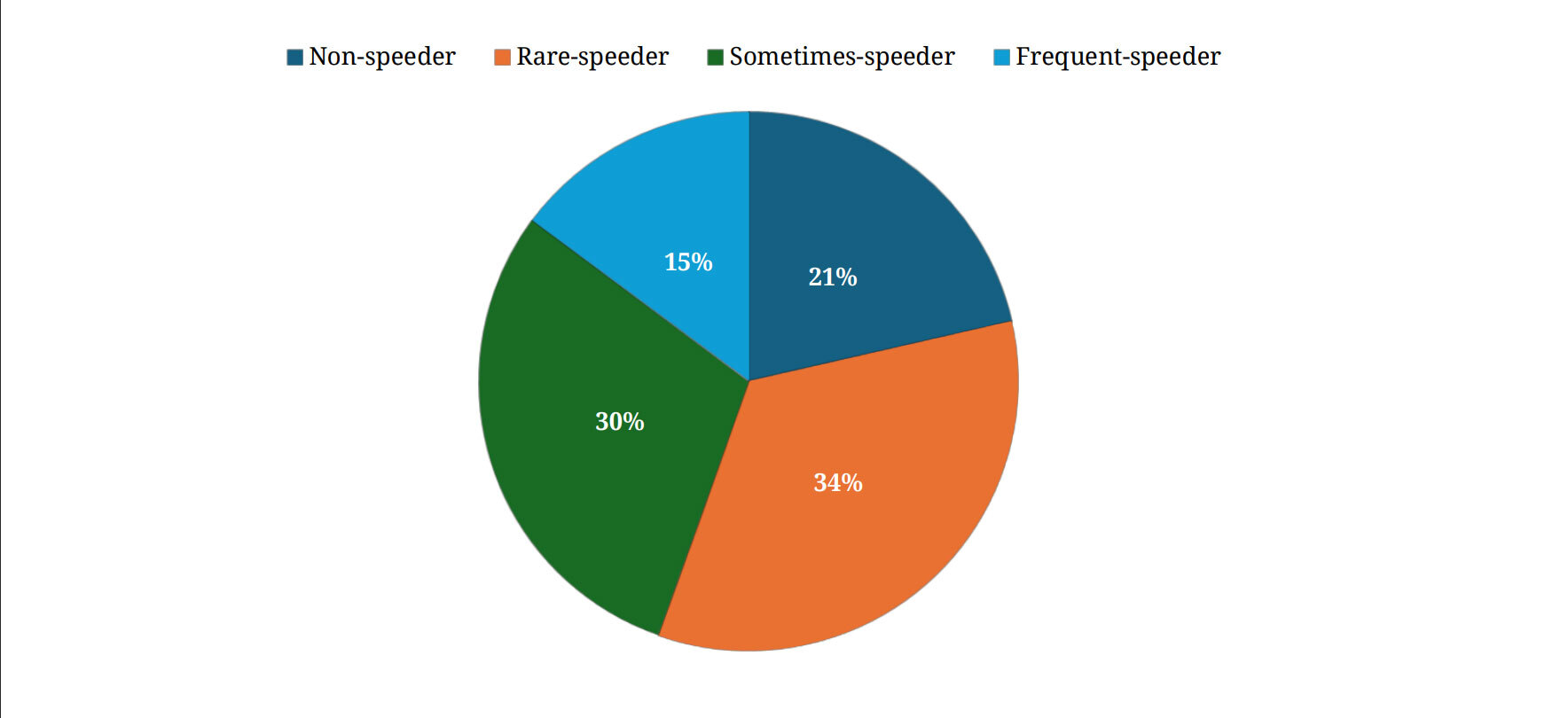


A study has found that 79% of Americans speed, at least occasionally.
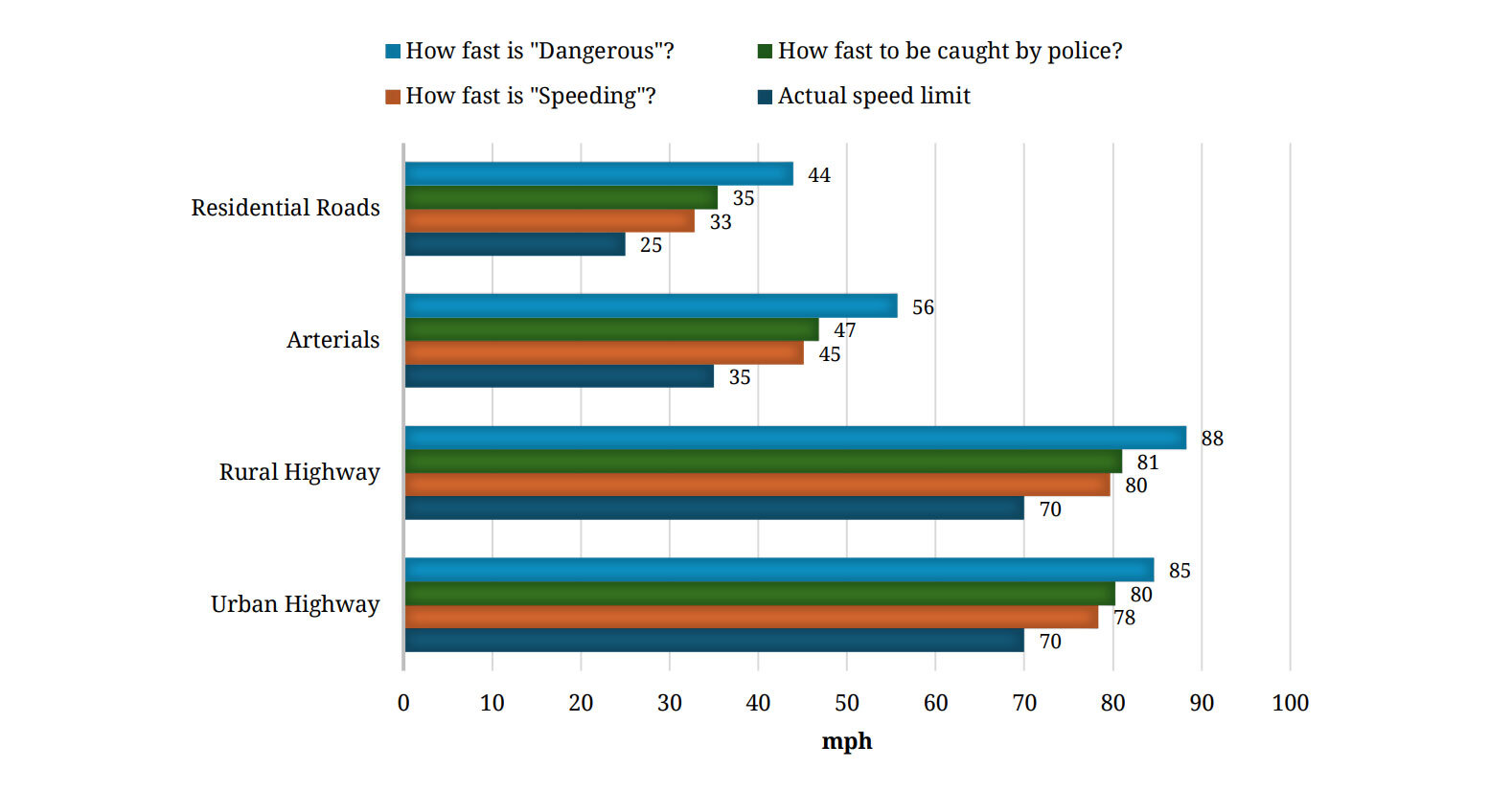
10 mph over the speed limit is what most people consider ‘actual’ speeding.
Speeding was a factor in nearly 30% of traffic fatalities in 2024.
The AAA Foundation for Traffic Safety has released a 196 page report that examines attitudes towards speeding. It’s not exactly a page turner, but it says “speeding is widely perceived as socially normative behavior among drivers.”
While there’s a lot to unpack, the study found that most people didn’t consider going a little over the speed limit to be speeding. In fact, in most cases – on residential roads, arterials, and rural highways – they didn’t consider it speeding until drivers were going an average of 10 mph over the speed limit. On urban highways with a speed limit of 70 mph, it wasn’t considered speeding until drivers hit 78 mph.
More: Your Car Already Has The Hardware To Stop You Speeding. It Just Isn’t Allowed To Yet
At slightly higher speeds, respondents thought police would be justified in pulling someone over. However, they didn’t consider things dangerous until drivers hit speeds of 44 mph on residential roads, 85 mph on urban highways, and 88 mph on rural highways.
AAA
Speaking of speeding, 79% of respondents self-identified as speeders. 34% were a rare-speeder, while 30% were a sometimes-speeder. 15% said they were a frequent-speeder, while a mere 21% said they don’t speed at all.
The top reasons for speeding are pretty obvious as 31% said they do it to get around slower drivers, while 25% speed to get to their destination faster. 21% do it to avoid holding up traffic, while 19% said it was just part of their normal behavior.
On the flip side, the top reasons for not speeding were to avoid tickets (79%) and reduce the chances of being involved in a crash (72%). 60% of drivers also cited bad weather as a reason to slow down.
AAA
To combat speeding, 87% of people expressed support for having an increased police presence in areas with a history of speed-related crashes. 71% supported automated speed cameras, which is surprising considering people hate tickets and government overreach.
The study also found that people generally dislike speed reduction infrastructure. Only 43% supported speed humps in an area with a history of speed-related crashes, while 40% supported rumble strips. Roundabouts had an approval rating of just 39%.
People were also mixed on intelligent speed assistance technology. Drivers were relatively okay with getting a warning on the dash telling them they were speeding, but support quickly dropped for systems that would automatically slow the vehicle down to the posted speed limit. Unsurprisingly, drivers were slightly more okay with a defeatable speed limiter than one with a hard limit.
While that’s just a brief overview, the study suggests speeding has been normalized and 30% of drivers believe “no one actually drives the speed limit.” AAA considers this alarming as speeding was a factor in nearly 30% of traffic fatalities in 2024.
AAA