


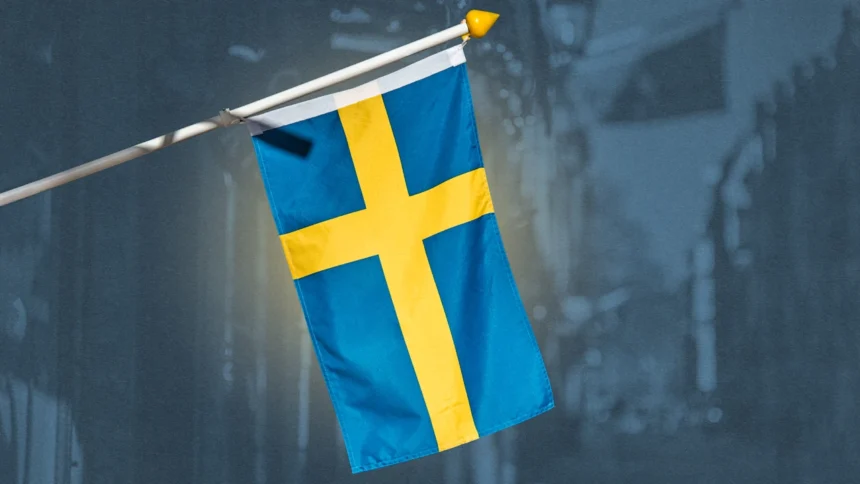
For the past decade, the global startup playbook has been clear: grow at all costs and dominate through visibility. Sweden has played a different game, one of profitability and sustainability—and is outperforming as a result. The country now ranks among the top 10 globally for unicorn companies, and first in Europe per capita, with 46+ billion-euro startups and counting. Earlier this year, vibe coding unicorn Lovable became the fastest growing software-startup in history, reaching $100 million in subscription revenue in just eight months
For a nation of just over 10 million people, that’s an astonishing concentration of innovation. Stockholm alone now hosts one of the highest “unicorns per resident” rates on the planet, second only to Silicon Valley.
Observers often credit this success to progressive policy, strong engineering talent, or a virtuous cycle of angel investors. Isabel Keulen, CEO of Stockholm School of Economics Business Lab, earlier this month cited the concentration of founders as the key ingredient to Sweden’s “secret sauce” of success.
But those are just part of the picture. As scaling trust is increasingly challenging in a noisy and fast-paced entrepreneurial environment, Swedish unicorn success points to something deeper: what we repeatedly see in Sweden’s success stories is a deep commitment to design.
Sweden’s embrace of minimalist, functional, human-centred design has built some of the world’s most trusted and scalable brands, from IKEA, COS and H&M to Volvo, Klarna and Electrolux—all known for a ‘made in Sweden’ design savviness. As a Kantar BrandZ study highlighted, these brands succeed globally because they “meet people’s needs in relevant ways” and build higher levels of consumer affinity.
Sweden’s approach to product and business building constantly emphasises “design as strategy”, design as an inherent mindset and way of life, rather than mere surface polish. Of course, it’s hard to recreate the exact environment that has nurtured the Swedish unicorn success. But there are some key principles of Swedish entrepreneurship and design practice that every business leader can emulate.
Democratize design
In Sweden, design has always been for everyone, not just the elite. IKEA reimagined furniture for mass affordability; COS did the same for high‑quality fashion. This democratising instinct expands markets and strengthens trust, because the brand starts from inclusion rather than aspiration.
Democratisation in Sweden is often about removing friction and intimidation (not just affordability). Pioneers like Polestar and Klarna differentiate through UI, experience design and a humane tone of voice, not purely technical invention.
For founders and scale‑ups, the takeaway is to broaden access without diluting quality. When you solve real human problems beautifully, practically—and intuitively—you reach a larger audience without having to shout to be heard. It’s a lesson especially relevant in saturated markets: design can be a social equaliser as well as strengthening growth.
Distil to amplify
As Swedish creators, we also share a distinct design sensibility: distil to amplify. When we hit on an idea, we refine it until its essence is unmistakable, then amplify that clarity through every touchpoint. What we don’t do is embellish a weak concept to make it prettier.
Klarna, for example, built its fintech platform around one simple promise: make payments effortless. Everything from the interface to the humour-tinged advertising—and even a premium unboxing experience of its credit card—reinforces that single idea. Or take beauty industry unicorn Byredo. The fragrance house has achieved massive, cult-like popularity, celebrated for its perfumery artistry and a minimalist design philosophy that distils complex emotions into covetable, high-end packaging.
This mindset demands restraint. It means trusting the power of a focused idea rather than compensating with noise. In practice, leaders can apply it by asking: “Are we making this simpler, are we crafting a solution or just adding polish to complexity?”.
Lead without ego
Another shared mindset is an aversion to hierarchies. This runs through many corporate structures in Sweden as well as how we approach collaboration and ideation. In Stockholm, a CEO is just as likely to occupy an open plan cubicle next to the intern than a corner office. Decisions rise from collaboration, not top-down instruction. Byredo’s Ben Gorham, for example, has built a narrative around inclusion and is known for being self-deprecating and approachable.
Such humility accelerates innovation. When a 21-year-old designer’s idea carries the same weight as a director’s, it builds creative momentum. At Spotify, autonomous squads, tribes, chapters and guilds operationalise this philosophy, allowing flexibility and rapid learning. Design, engineering and product are embedded into decision-making units rather than hierarchical approval chains.
Leaders everywhere can emulate this by creating psychological safety and visible access. Not just open-door policies but processes of collaboration, feedback and encouragement that run through every interaction. The goal isn’t consensus for its own sake but a culture that listens widely and executes quickly.
System behind the success
These behaviours don’t appear in isolation. They grow from a national environment that rewards curiosity and cushions risk. Free education and universal healthcare make experimentation possible for a wide share of the population.
Furthermore, business and creativity are inherently allied. For example, The Stockholm School of Economics often pairs finance with art and literature, reinforcing that culture and commerce advance together.
Even everyday experiences (from top tier infrastructure and digital connectivity to packaging on shelf) reinforce those values, showing the commitment to the Swedish design mindset: disciplined simplicity, thoughtful function, quiet beauty. The design bar is so high it becomes societal conditioning.
Sweden’s unicorn surge suggests that sustainable innovation doesn’t begin with coding or capital. It begins with clarity, with the courage to refine, to open, to trust.
While the world’s loudest start-up environments often chase spectacle, Sweden is thriving by turning design into its growth engine. The country built an economy on precision, intuitive design and empathy; proof that progress doesn’t always have to shout or be centre stage. In a global market optimised for noise, Sweden is proving that clarity scales better.