

The post ‘This Is Running:’ A Review of Raziq Rauf’s Book Celebrating the Culture, History, and Future of Running appeared first on iRunFar.
At a time when so much about running is rapidly changing — from the way we run to how we dress to how we consume running content — ‘This Is Running” by Raziq Rauf offers an archive of running culture that reaches back to the middle of the 20th century. That’s a broad spectrum to cover in one book, but Rauf — who is perhaps best known for his Substack, “Running Sucks,” which includes interviews with runners, cultural think-pieces, and more — does a remarkable job of touching on enough bases to make it feel comprehensive. For road, track, and trail runners alike, it feels relevant. To Rauf, it’s all just running, which explains why it feels so accessible and democratic for so many different types of people.
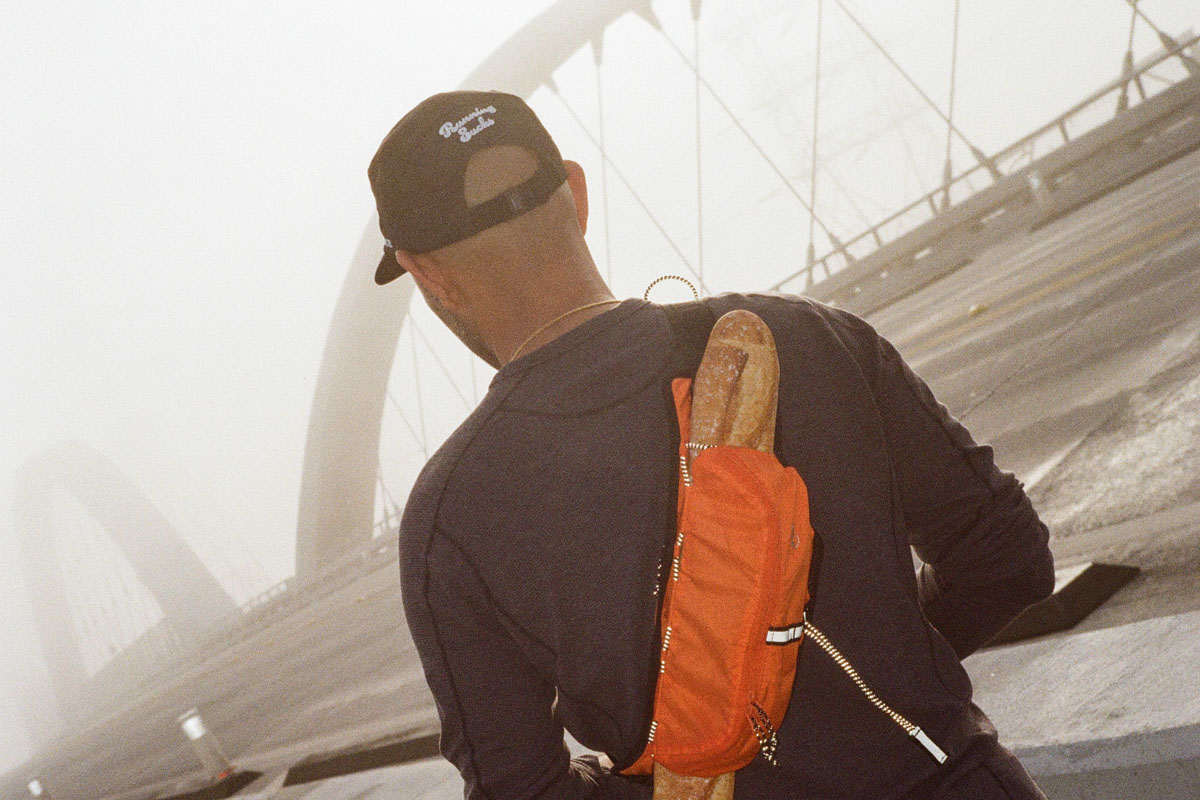
Rauf identifies as both a runner and a writer. He’s been a writer for 25 years — formerly a music journalist — and picked up running in his 20s. He started “Running Sucks” in 2023 as a way to write about something that he cared about, and the newsletter has amassed over 5,000 subscribers over three years. For anyone who balks at the playful title of the Substack, or indeed for anyone with whom it strikes a chord, Rauf is quick to say, “Running sucks … but I love it.” Rauf’s new book is something of an extension of his Substack and uses some of the same text previously published online. He saw the book as an opportunity to make something tangible and physically permanent. To be, perhaps, a physical manifestation of his love of the sport.
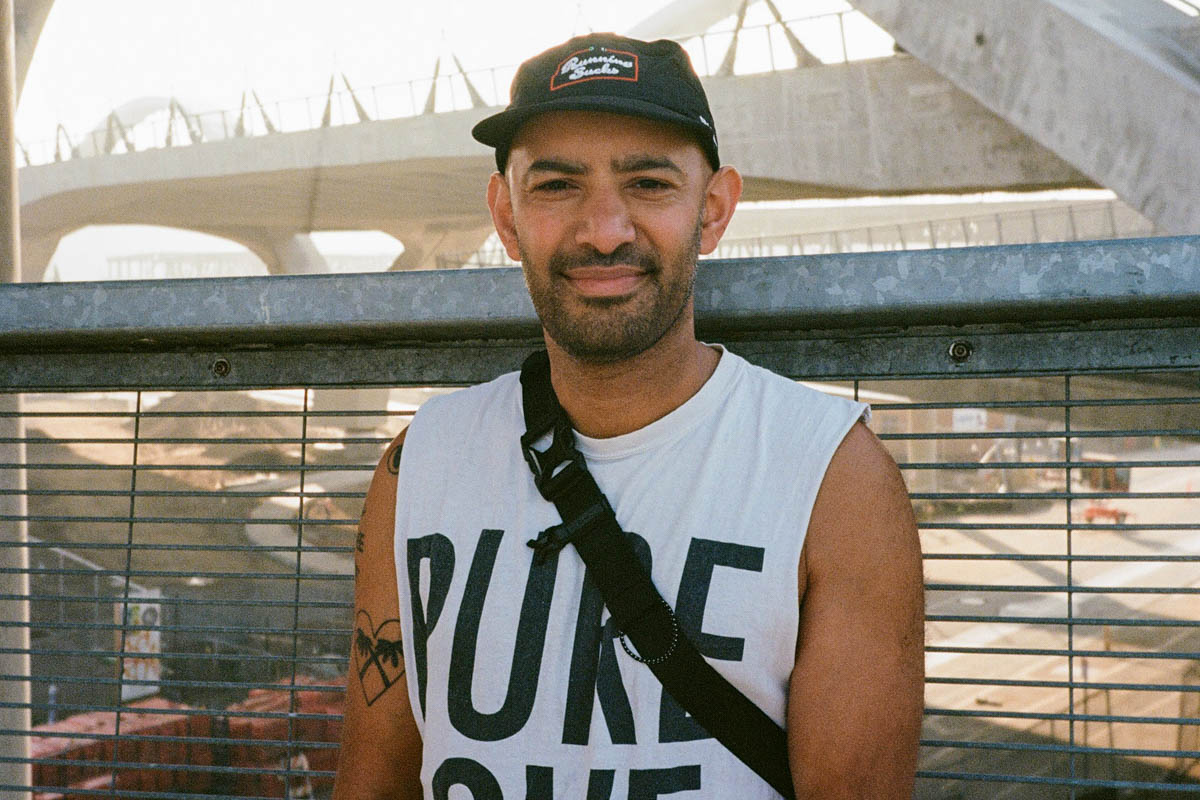
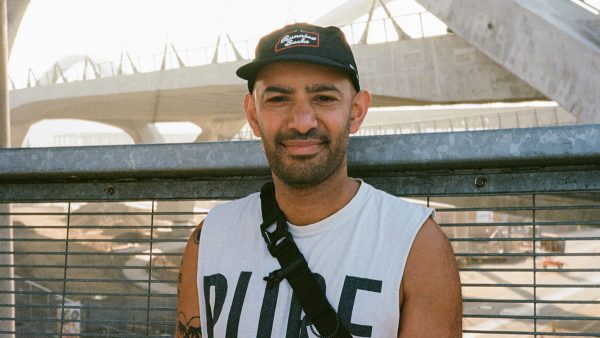
Raziq Raul, the author of “This Is Running.” Photo: Carly Palmour
A Physical Presence
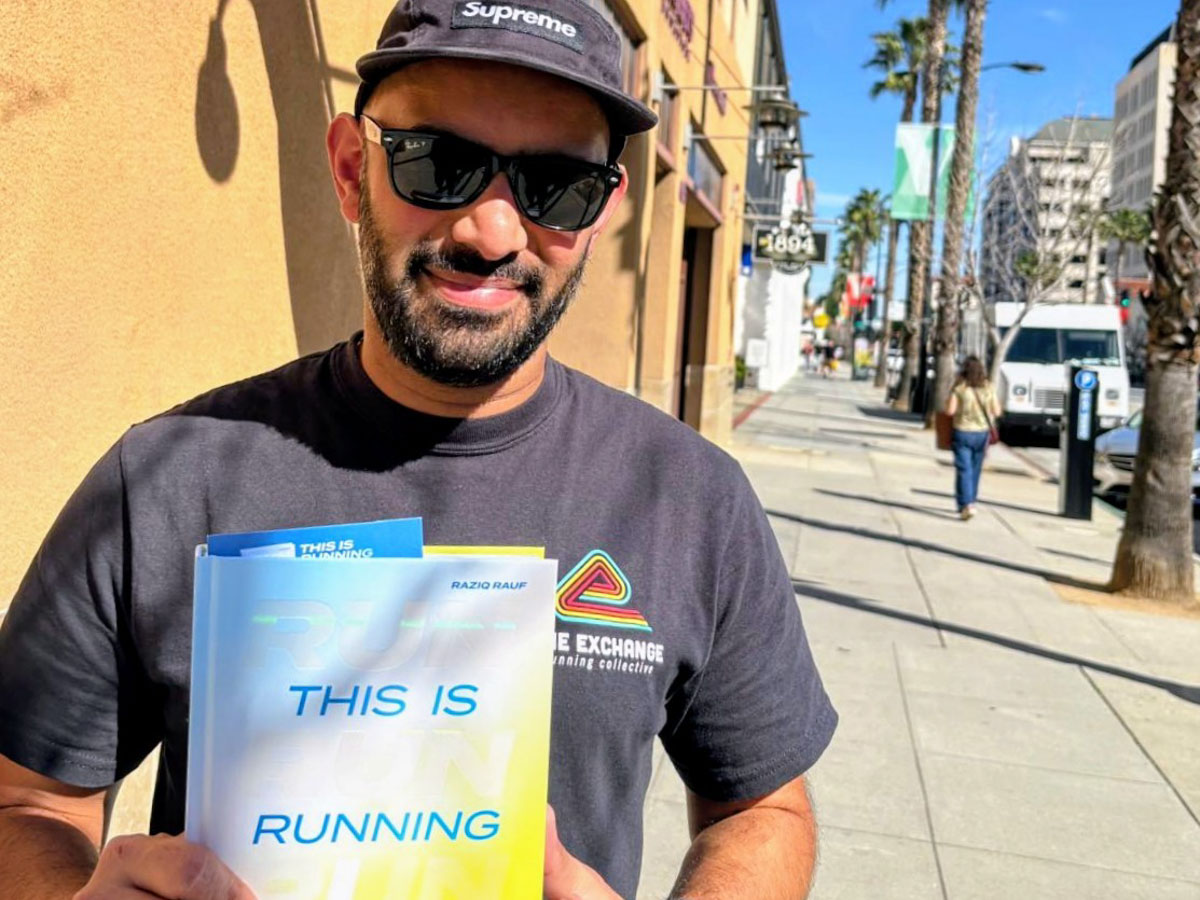
The book is gorgeous to look at. It’s a satisfyingly weighty, hardcover coffee-table book with a luxurious, inky, papery smell. Talking about the book’s publisher, Rauf says, “I went to Batsford [the publisher] because I knew they created beautiful specimens, beautiful artifacts, things that people wanted to own.” To create the book, Rauf and Batsford gathered era-defining photos from across the sport, making it a rich experience even to thumb through idly. We see Jasmin Paris finishing the 2024 Barkley Marathons, Usain Bolt winning the 100-meter race by a landslide in the 2008 Beijing Olympic Games, a pair of Satisfy shorts covered in salty sweat marks, and Joe Strummer of The Clash running the 1983 London Marathon. Even at a glance, this is very much running.
“This is Running” offers the physical presence of a coffee-table book. Photo courtesy of Raziq Raul.
Rauf writes lightly, reflectively, and philosophically about various categories of the sport, including the races we run, technological developments, running clubs, and crews. He includes interviews with a handful of key figures in the sport, including Dylan Bowman of the media company Freetrail, Catherine Poletti, co-founder of UTMB, and Josh Clark, creator of Couch to 5K, a program designed to get people running. After years of research, Rauf has gathered stories and statistics to help answer questions such as: What is the sport? Why do we do it? Where do we do it? What do we wear? Who are our friends? What are its political issues? What might the future hold?
A Lens on Running
For most of us, our relationship with how we consume running media and participate in the sport has changed dramatically, even in this century. However, as Rauf states in the book, “The thing about running is that while it can be very easily augmented by technology, when you boil running down to its purest essence, it’s just about a person — you — and your desire to run.”
In places, the content feels nostalgic, even though some of the innovations are relatively recent. Remember when Nike made the FuelBand to log your activity? Remember running with a supposedly jog-proof portable CD player? Remember when Strava was primarily for cyclists?
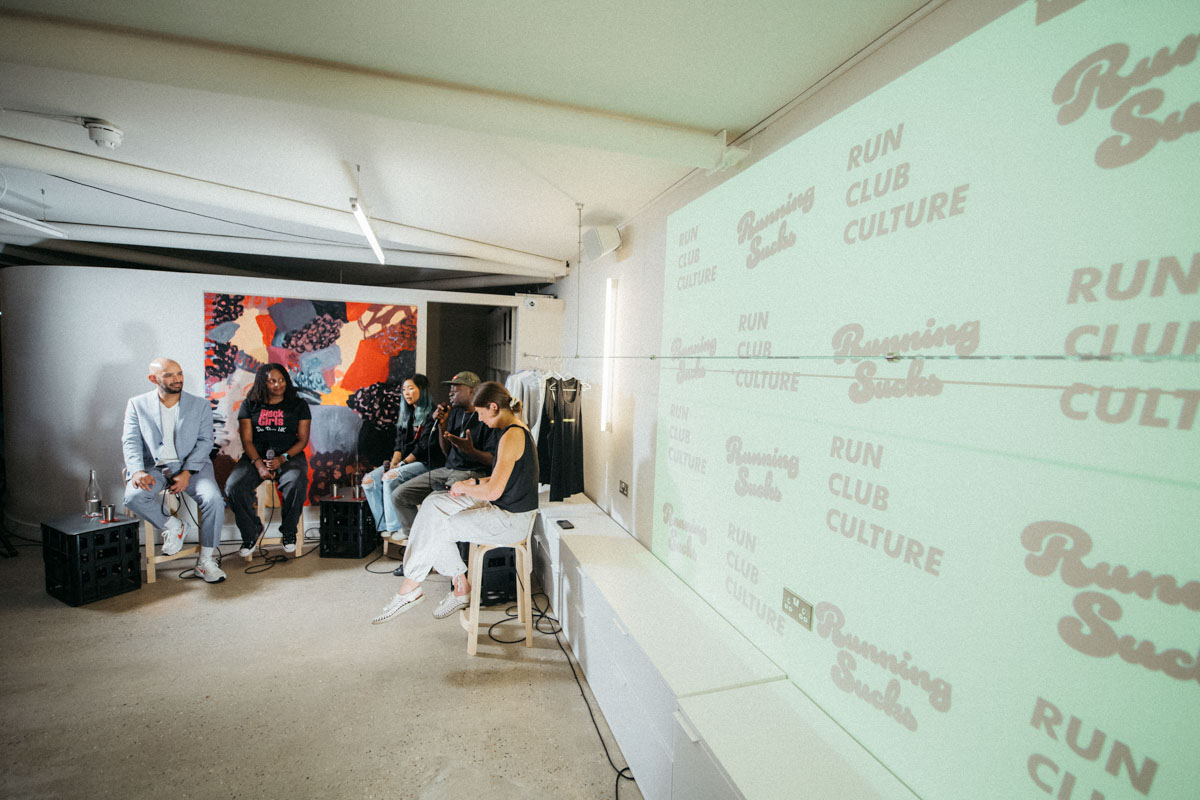
Raul (far left) at a panel about running culture. Photo: Benjamin Gibson
Rauf’s look back in time also points a lens at important issues that remain at the forefront of running culture. Remember when the female experience of the sport was barely a conversation? This is sadly not quite nostalgia. Kathrine Switzer is in here, being attacked while running the Boston Marathon in 1967 and becoming the first official woman finisher of the event, although Bobbi Gibb ran the event unofficially in 1966. Alysia Montaño — six-time U.S. national champion at the 800-meter event — waves to the crowds at the USATF Outdoor Championships in 2017 while noticeably five months pregnant. Sophie Power is here, breastfeeding her baby in an aid station at UTMB in 2018. Some things have changed, some haven’t, and Rauf is right there with us in anger and celebration.
Rauf writes most movingly about the intimacy shared between fellow runners, the connection formed by the sport revealing the best and worst sides of ourselves. He writes, “When you can finally pause at the end of the group run, gasping for breath, nobody cares how disheveled and sweaty you look. After a serious workout, you might be full of emotion — whether that’s satisfaction, frustration, pain, or elation — and, again, you’re sharing that moment with those around you. It’s a moment that you might not normally think to share, but you’re already standing among others just like you.” This really resonates. We all have those friends who we barely recognize in civilian clothing, but we know them in a vest soaked in sweat, bent over double with a snotty nose. We’ve probably hugged them in that state. We know the truth of each other. As Rauf tells me, “Once you have that vulnerability and you share that moment with somebody, you become fast friends.”
A Writer and Runner
Rauf grew up in Redbridge, North East London, England, but now lives in Los Angeles, California, where he’s embedded in the running community. The weekend before we spoke, he was handing out ice pops at the 2026 Los Angeles Marathon. He enjoys running with friends, but what’s perhaps most surprising about Rauf is that, despite his love for the culture of running, the idea of running a marathon or racing seriously at all is laughable to him. He doesn’t want to head to a race at 3 a.m. or stand on a crowded start line. “I guess I’m more moderate in that regard,” he says. “I identify primarily as a writer, and so I’m more likely to push myself into extreme discomfort for writing purposes.” Rauf wants to use his Substack to discuss serious issues, including highlighting running crews affected by immigration authorities. “If I can continue to grow and use that platform to help things become better,’ he says, “that’s really all I could want.”
Raul identifies as both a runner and a writer. Photo: Carly Palmour
Rauf studied human geography at the University of Manchester, focusing on the relationships between people and place in an urban environment, specifically through a feminist lens. This seems to be the basis of many of his views, and the foundation of his ability to look at an environment, a culture, and the ways people engage with it from a bird’s-eye view. In just a few paragraphs in the book, he goes from social media, the Barkley Marathons, and the indigenous tribe of Raràmuri runners, to the month-long Chipotle Challenge, where runners complete the same short Strava segment as many times as possible. Then it’s on to author and runner Haruki Murakami. The book mirrors the culture of running as a living, breathing, evolving, and growing network of people, events, streets, and trails. As culture continued to sprawl in multiple directions, it feels like a good time to pause and take stock of where it exists today, and Rauf is deftly equipped to make the connections. “Somebody that I met on this journey over the past few years,” Rauf recalls, “introduced me as a ‘running culture archivist,’ which puts me in the same boat as a researcher or librarian. And I am super down with that.”
Rauf does most of his writing while running. He tells me that he believes writing is 90% thinking about what you want to write, and 10% actually getting it down. He relishes the time spent in his own head, figuring out his thoughts more thoroughly.
A Time Capsule of Running
The writing in the book certainly feels fresh. It feels conversational, and while it could have benefited from another proofread in places, it offers a wealth of points that invite reflection, inspire further research, and encourage deeper appreciation. There are films I haven’t heard of, running festivals I never knew about, and news stories that passed me by. Rauf’s research is thoughtful and thorough, and he keeps an element of his own perspective in the writing, adding warmth. This is a history of people, after all. Rauf is our tour guide, our documentary presenter, and indeed, our librarian.
As a fan of the sport, as a fully immersed cult follower, this is the sort of book I would put in a time capsule to represent runners — and humankind — in the years to come. It seems to explain: There were these people who called themselves runners, and they came in all shapes and sizes and ran in all sorts of places. They wore weird clothes, they cared a bizarre amount about analyzing the data of their activity, and their desired outcomes from said activity ranged from better health to social connections to eternal glory. Ultimately, they sought happiness. It feels like this is the message Rauf leaves us with.
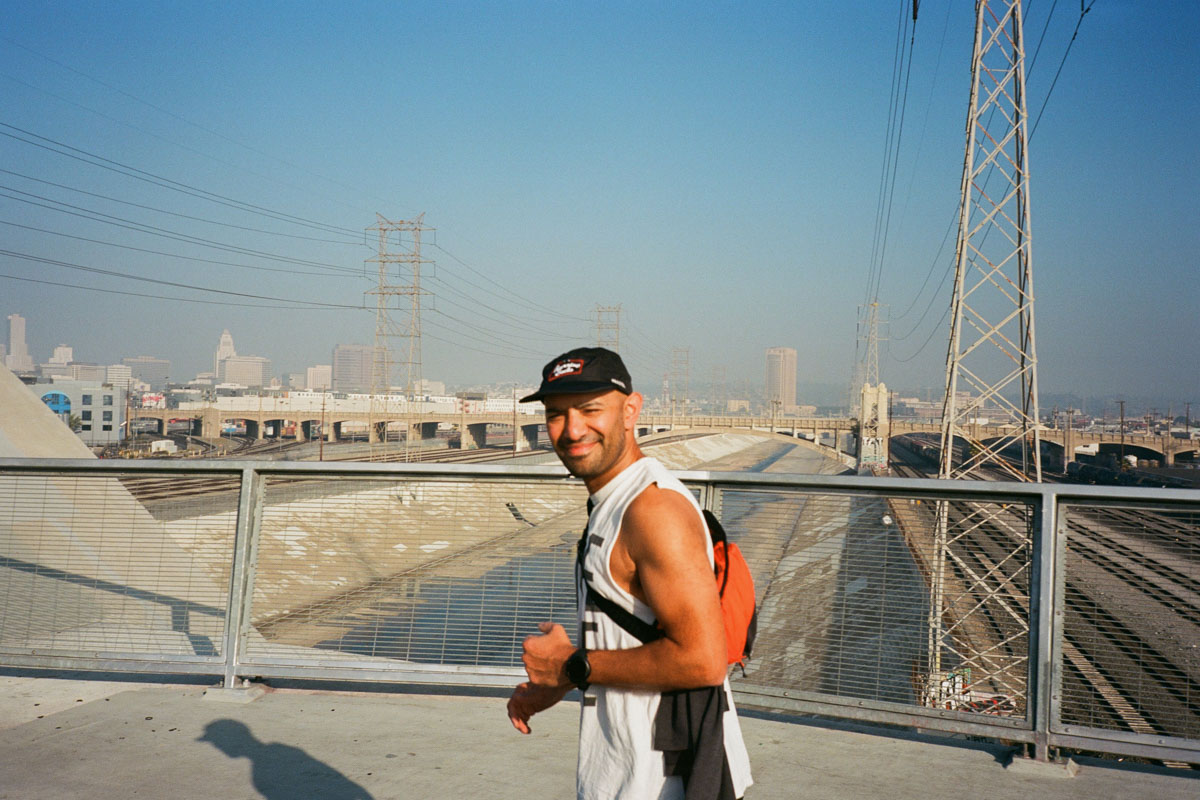
Raul explores many aspects of running culture, not just racing. Photo: Carly Palmour
It’s universally acknowledged that it’s an exciting time to be in the sport, and so it’s a thrilling time to be keeping note of what’s happening. Rauf has created a physical book that celebrates all of that. Read it cover to cover, or dip into it when you’re procrastinating getting out for your run. Be inspired by it or be angered by it, enjoy the photos or learn about a moment in the sport. Whichever way you consume it, reading “This Is Running” feels like celebrating being a part of this sport and this community.
Call for Comments
Have you read “This Is Running?” What did you think?
What historical running moments stand out in your memory?
‘This Is Running:’ A Review of Raziq Rauf’s Book Celebrating the Culture, History, and Future of Running by Lydia Thomson.