


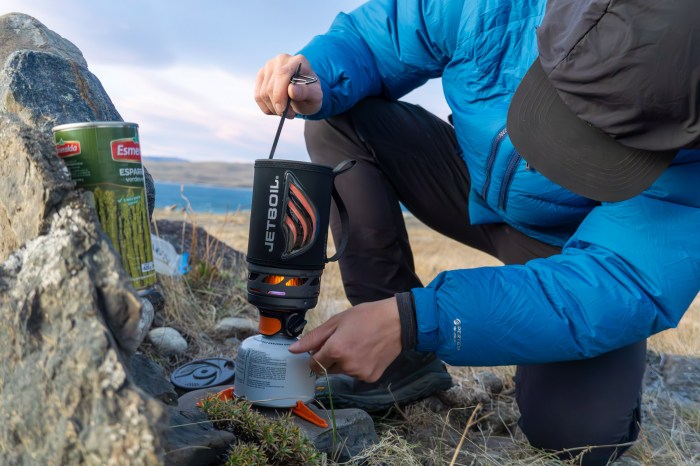
There’s nothing quite like a warm meal after miles on the trail. Our seasoned testers, Chris Carter and Ian Aktinson, have multiple thru-hikes under their belts, and in the last year alone, took five of this year’s most promising stoves on 100+ miles of trail in Colorado and Washington to test their mettle.
While there isn’t a single backpacking stove that’s best for everyone out there, we’ve organized this guide into categories to help you find the best stove for you. Our top pick, the SOTO WindMaster, is an all-around winner for most backpackers out there, while the spend-wise GSI Outdoors Glacier does just as well on a picnic bench as it does on quick overnights.
We considered all angles, ran fuel consumption tests, and, in total, have been testing stoves for this guide since 2020 (and used 50+ models in the time). Check out our top picks below.
Editor’s Note: We updated our Backpacking Stove guide on May 7, 2026, to add more insightful information to our buyer’s guide to make your next stove purchase a breeze.
The Best Backpacking Stoves of 2026
SOTO WindMaster
SOTO WindMaster
(Photo/Ian Atkinson)
(Photo/Ian Atkinson)
(Photo/Ian Atkinson)
(Photo/Ian Atkinson)
Specifications
Pros & Cons
Pros
Ultralight with removable pot supports
Great wind resistance with deep burner head
Very fuel efficient
Cheaper than comparable MSR stoves
Cons
Not quite as hot as comparable stoves
Too small for use with large pots and pans
Piezo igniter will eventually fail
The SOTO WindMaster ($70) is our newest “best in class” backpacking stove. It combines powerful boil performance with an ultralight, wind-resistant package, and compared to the ultra-similar MSR Pocket Rocket Deluxe, it ever-so-slightly edges it out for our top title.
The WindMaster is a canister stove featuring a well-designed concave burner and two interchangeable pot stand options. Its packability allows you to fit it inside smaller pots and even coffee cups, meaning minimalist backpackers will be smiling ear to ear. Its concave burner is exceptionally wind-resistant, performing with gusto even at 14,000’ on top of a Colorado 14er — the equivalent of Camp 2 on Denali.
While it isn’t the lightest canister stove on our list, like the BRS-3000T, or as quick to boil as the MSR Reactor, the WindMaster shines as the most well-rounded offering on the market for backcountry enthusiasts. We put it head-to-head with our former top spot holder, the MSR PocketRocket Deluxe, in multiple bench tests that pushed each stove to the limit.
The MSR was able to boil 1 liter of water about 40 seconds faster than the 4-minute, 20-second time the WindMaster put up. When we reconfigured our test to add wind, however, the SOTO was hands down the champ, displaying wind resistance that means you’ll be eating sooner. That’s along with better fuel efficiency, so you can backpack for longer on the same canister — or simply have the ability to prep more hot drinks on those chilly mornings.
Lead stove tester Ian Atkinson used his WindMaster on thru-hikes of the PCT and Colorado Trail, where he often ended up camping above treeline. “There’s nothing better than cooking dinner with a view of the sunset on the horizon after a long day of hiking — and there isn’t a stove I’d pick over my SOTO for the task.”
Overall, the SOTO Windmaster combines fuel efficiency, wind resistance, packability, and performance in a way that no other stove can truly match.
Specifications
Pros & Cons
Pros
Affordable price
Large, powerful burner
Good simmer abilities
Tough to damage
Cons
Not the fastest boil time
On the heavier side
Pots aren’t held as tightly to the stand
Doesn’t collapse
The GSI Outdoors Glacier Stove ($40) has a lot going for it, not just the amazing price. The canister stove can support virtually any size pot or pan (great for those who frequently camp and cook in groups), and the wider burner spreads heat out evenly.
The burner also has an impressive output of 11,000 BTUs, putting the power of a traditional camp stove in canister stove form. Given the output, we were hoping this stove would have a slightly faster boil time, as it took an extra 2 minutes compared to stoves like the PocketRocket Deluxe. That said, it held up in windy conditions, and the boil time stayed roughly the same.
The stove also has clearly marked +/- simmer controls. We loved using this stove to pan-fry, sauté, and even rehydrate and cook some beans. Everything in the pan was nice and evenly cooked.
Our only con? The wide and sturdy pot support design doesn’t fold, so with a 5-inch diameter, it’s not the most compact. However, it can still be packed/stashed into a larger pot. If you’re headed out on an extended journey where packed space is a greater concern (but you’ve got to stretch your dollars still), the BRS-3000T will only run you around $17 and will even boil water a bit quicker.
Our biggest issue with that stove, however, is the compact burner head, which can lead to scorching if you like to do more than rehydrate meals. If you’re more of a camp gourmet, snag the Glacier.
MSR PocketRocket Deluxe
MSR PocketRocket Deluxe
(Photo/Seiji Ishii)
(Photo/Seiji Ishii)
Specifications
Pros & Cons
Pros
Very fast boil time
Effective simmer capabilities
Very compact size and comes with small stuff sack
Raised sides of burner head help reduce stove being blown out
Wide mixture handle is easy to dial in
Cons
Piezo ignitors aren’t as durable as SOTO versions, and aren’t user-replaceable
Not as fuel-efficient as some canister stoves
Second best at wind resistance
Read Review: Best Backpacking Stove Yet? MSR PocketRocket Deluxe Review
While the venerable PocketRocket has been the de facto stove for many years now, the MSR PocketRocket Deluxe ($85) makes a few improvements and extra features that push it near the top of our list. You’ll pay more for them, but we think the Deluxe is worth the extra spend as a reliable backpacking stove that will work for most hikers.
The Deluxe model is an ultralight stove with stainless steel folding pot legs, a fast boiling time, and a compact design. The Deluxe is just a few grams heavier than the PocketRocket 2. But unlike the 2, the Deluxe has a built-in pressure regulator (like in the MSR WindBurner), a broader burner with wind protection (quite similar to the SOTO Windmaster), and an integrated piezo igniter.
During testing, we found the pressure regulator equated to more consistent boil and simmer capabilities and helped reduce the impact of cold and wind on stove performance. It also boiled faster than any other stand-alone stove, and just behind integrated systems like the MSR Reactor or Jetboil stoves. That said, when the wind starts to blow, the WindMaster lives up to its name, and both beat the PocketRocket Deluxe in boil time, and did it with less fuel burned.
This stove’s simmer capabilities are great. The slightly wider burner makes a difference, and when cooking dishes like oatmeal or mac and cheese, we didn’t experience any burning or sticking on the bottom of the pot. Simply put, the PocketRocket Deluxe is an excellent alternative for an all-around stove due to its combination of lightweight, consistent performance, boil time, and price.
Jetboil Flash 1.0L Fast Boil
Jetboil Flash 1.0L Fast Boil
(Photo/Erika Courtney)
(Photo/Erika Courtney)
(Photo/Erika Courtney)
Specifications
Pros & Cons
Pros
Even easier to use than previous version
Highly reliable integrated design
Highly durable ignitor
Cool aesthetic and multiple patterns available
Cons
Still easy to topple over
Still has easy-to-lose parts (like the cup)
There are a number of integrated stove systems on the market, but the one we keep coming back to is the Jetboil Flash Fast Boil ($145). Redesigned in 2025, the Flash gained a better kitchen-stove-style regulator knob, a better-protected piezo ignitor, heat-resistant grips, and a sturdier locking mechanism between the stove and pot. If you want an all-in-one system, the Flash is close to perfect.
We broke in the new version of the Flash on trips both familiar and foreign — in North Carolina and in Chilean Patagonia — and in both cases, it excelled. The biggest perk of this stove is its super-fast boil time — about 4 minutes per liter. Like the previous model, the Flash has an all-in-one design with an on-stove igniter, improved stove-vessel integration (locking the pot to the stove), and a savvy lid that doubles as a pour spout (or French press with the right accessory).
The new regulator is certainly a better design, and is as familiar as the one on your home kitchen stove. This also integrates the ignitor to activate with a click while dialing the stove up. That ignitor is now much better protected in the stove and is insulated by a ceramic hood. The stove burner is also nicer to handle, due to the molded-in rubber grips.
Unlike most other systems on the market, like the MSR Windburner and Reactor, this stove has a few additional user-friendly features. This includes a heat-indicating sleeve that changes color to let you know when water is boiling, so you don’t waste time or fuel. In practice, this was great when we were running around completing camp chores.
The burner head on the Flash is more traditional than the radiant heating element styles on MSR stoves, and while we think it is more efficient, it can be a bit tricky to get started at times. This Jetboil is simple to get rolling, and whether just boiling water or eating straight from the pot, we found this system just plain easy to use.
Overall, the Flash is a great and durable stove system. However, it does have its limitations, as you can only cook what can fit in the pot, and you can certainly create your own more compact stove systems. If you’re looking for a stove that emphasizes ease over all else, however, this is the one.
Specifications
Pros & Cons
Pros
Can use a variety of fuel types
Great for cold-weather cooking
Performs well at high altitudes
Field repairable
Cons
Not the most packable
Pretty heavy
Need to prime the stove and do maintenance in the field
With the option to burn nearly any fuel — including white gas and isobutane-propane — the MSR WhisperLite Universal ($200) has quickly become a four-season favorite. This is especially true if you find yourself traveling to countries outside North America, where fuel options may be limited. It’s not the lightest stove on the market at 13.7 ounces, but its versatility makes up for that.
We’ve used this stove for really tough winter camping, and it has outperformed everything other folks have brought to elk camp. While canister stoves die in cold weather, the WhisperLite cranks out water-boiling BTUs, even above 10,000 feet.
We had no problem balancing a pot on it. With remote simmer control, we were able to make everything from fluffy pancakes to delicately scrambled eggs. Plus, it got the water boiling for coffee in no time. We’ve heard reports of problems with the fuel connector threads stripping, but we haven’t experienced a problem in more than three years of testing.
Because it uses liquid fuel, the WhisperLite does require some TLC and stove knowledge, including priming the stove before use and stove maintenance in the field on longer excursions. As long as you familiarize yourself with the stove, you should be set.
For truly far-flung expeditions, we look at the WhisperLite’s overbuilt cousin, the XGK EX, but for everything else remote, this is the stove to do it with.
MSR XGK EX
MSR XGK EX
(Photo/Nick Belcaster)
(Photo/Nick Belcaster)
(Photo/Nick Belcaster)
Specifications
Pros & Cons
Pros
Multi fuel stove can burn white gas, diesel, and kerosene
Rugged build employs user-replaceable hardware for servicing
Shaker Jet keeps fuel jet clean throughout trip
Broad pot stand can accommodate stock pots
Cons
Will need to purchase separate fuel bottles
Quite loud roar when running
Expensive
The MSR XGK EX Stove ($220) is the stove we’ve equipped Denali expeditions with, and they’ve proven themselves in the harshest conditions on the planet. This multi-fuel stove takes everything about the WhisperLite and juices it up, creating a rugged option to toss your stock pot on and melt snow for the entire team.
Like the Universal, this stove can also burn a variety of fuels, but with a more international bent. With a few different jets, you can burn aviation gas, diesel, and even jet fuel in the XGK. It won’t be able to run off isobutane canisters, however, but we see limited use in these on expeditions due to their bulk and poor performance in cold temperatures.
Otherwise, an overbuilt stand makes up the bulk of the XGK, which is broad enough to support a five-gallon stock pot for melting snow. Lighting the stove will require priming like the WhisperLite, and it’s noticeably louder (some in our ranks call this the “jet engine”) when running. But despite that, the heat output is tremendous, and it’s nigh impossible to blow out.
The ability to field strip and maintain this stove also makes it a natural expedition choice, and MSR sells a repair kit that will refresh the wear items on this burner. We’ve had ours down to individual parts more than once, and it’s kept this stove burning happily for years now.
We most often utilize a stove board to mount the XGK, which insulates the system from cold snow beneath it. If your expedition is more vertical, we reach for the MSR Reactor more often than this stove, as integrated stove systems’ hanging capabilities reign when used in tight bivy tents or portaledges. But for long walks on the ice, we’re grabbing this stove every time.
Specifications
Pros & Cons
Pros
Affordable price
Super compact packed size
Ultralight
Hot enough to boil water fairly quickly
Cons
Small burner head
Not the most fuel-efficient stove
Quality control isn’t the best
Ultralight and by far the lightest canister stove on this list at just 26 g, the BRS-3000T ($18) is a titanium alloy stove manufactured by BRS in China. What we liked about the BRS — it’s ultralight and performs great. In testing, we really liked its packability, easy setup, and fairly good performance in windier weather.
This is our top recommendation if you are looking for a truly ultralight stove (less than a third the weight of an MSR PocketRocket Deluxe). Senior Editor Nick Belcaster used the BRS for his thru-hike of the PCT, where it did everything he needed it to. Treat this little stove well, and it’ll go the distance.
This stove wasn’t our top pick for a couple of reasons. The quality control can be all over the board, with some stoves sporting stiff pot support hinges, while others are loosey-goosey straight out of the box. We’ve also heard tales of poorly sealing canister interfaces. For the price, we’re willing to exchange the stove if need be, but we’ve also had good luck with our initial purchase.
The pot supports are also a bit more delicate and narrower than on other canister stoves, meaning it’s better for smaller pots (1-1.5 L) and ultralight cookware, rather than large pots and pans. It’s also important to note that this little stove has been licensed by a few different brands out there (notably, we tested it in Grayl’s Pathfinder Titanium Camp Stove Kit), but the genuine article is from BRS.
If you’re concerned about whether your camping pot is compatible with this stove, we recommend double-checking the dimensions. If you’re after pure ultralight minimalism, though, don’t pass the BRS-3000T by.
Other Backpacking Stoves We Enjoy
Specifications
Pros & Cons
Pros
Proven design
Lightweight but durable
Affordable
Solid simmer control
Cons
No piezo lighter
Somewhat unstable
No pressure regulator as in the Deluxe model
For the budget- and weight-conscious hiker, the MSR PocketRocket 2 ($60) is a proven stove at a good price. Weighing in at a scant 2.6 ounces (excluding the fuel canister), this is a supremely packable stove. The serrated supports can hold a variety of pots, and lighting is a simple matter of turning the knob and using a match to ignite.
We’ve had a few close calls when stirring aggressively or bumping the pot, so set it up in a level spot and take care to keep the pot upright. Nobody wants to pick their dinner out of the dirt. The PocketRocket 2 is also one of the best-performing stoves out there in terms of price.
This is an extremely reliable stove, and a top pick for long-distance backpackers and weekend warriors alike for its dependable durability and light design. One of the authors of this guide used the first iteration of the PocketRocket on his thru-hike of the PCT in 2018, and then carried the same PocketRocket 2 on consecutive thru-hikes of the CDT and AT. It never let him down, whipping up hundreds of meals in the backcountry with zero issues.
Why was this stove not our top choice? Trust us, it was close. But between the PocketRocket 2 and MSR’s Deluxe model (which offers an integrated pressure regulator and igniter, and performs better in wind), the Deluxe won us over.
We tested the Jetboil Stash, the brand’s lightest stove system, to see how it performs in the backcountry; (photo/Josh Kirchner)
The FluxRing design increases surface area, improving heat transfer for faster, more efficient boil times; (photo/Josh Kirchner)
(Photo/Josh Kirchner)
(Photo/Josh Kirchner)
Specifications
Pros & Cons
Pros
Lightweight
Fast boil time at 2.5 min. for 16 oz. of water
Grooves in stove legs keep pot from sliding off
Cons
Even with grooves in the stove legs, there is still the potential for this to be knocked over
No built-in ignitor
The Jetboil Stash ($165) is the brand’s lightest cooking system, weighing just over 7 ounces and packing down into the 5” x 5” cook pot. Unlike the other integrated Jetboil systems, the Stash is a canister stove with a matched pot, meaning you’ll trade some windproofing for versatility.
Jetboil didn’t leave any tech out in stripping down this system. It fitted the cookpot with its FluxRing design to add surface area and increase heat transfer. Comparing this pot to flat-bottomed versions, we certainly noticed a difference in boil times. Hunter Josh Kirchner was able to get 16 ounces of water to boil in just 2.5 minutes in the Stash. That’s pretty dang quick compared to the rest of the stoves we’ve tested.
The stove legs on this system integrate into the bottom of the pot, noted Josh, and while it’s not the notched system that other Jetboils use, it is more secure than most canister stoves. You’ll still need to use care, however, and the included canister legs can go a long way in keeping your stove upright.
Packing everything into the pot is a bit of a puzzle, but Jetboil thought this out. When packed up, a 4-ounce fuel canister sticks to the top of the lid, keeping it out of the way of the stove and canister legs. When everything is nested together, it creates a tight package that packs away well into cramped backpacking packs.
The system is especially impressive when compared to assembling your own from something like the Fire Maple Petrel G2 Pot and an MSR PocketRocket. The combined weight of that system would be 9.5 ounces, versus 7 for the Stash. If you’re after the lightest Jetboil system out there and appreciate having a stove and pot made for each other, the Stash is a great solution.
Specifications
Pros & Cons
Pros
Insanely ultralight titanium design
Packable into almost any cook pot
Cheap price
Uses alcohol fuel, which can be easy to find in remote places
Cons
Limited use cases with restrictions in wilderness areas
Not the most stable pot stand
No flame regulator
The Toaks Titanium Siphon ($35) is an alcohol stove that tempts you with its ultralight weight and old-school mentality. With the ability to use multiple types of alcohol/ethanol fuels, the Siphon is versatile in the sense that you don’t need to find a backpacking-specific canister fuel on trail — you simply need to find a hardware store.
Its use is simple: Pour in some liquid fuel and set it ablaze. Unfortunately, compared to modern canister stoves, it isn’t very efficient for boiling, taking more time to reach a boil for less than half the water volume than the SOTO WindMaster.
You’ll also need to use a stand with this stove, and the optional Toaks pot stand can be a little shaky, so you’ll want to take care with setup. These are the tradeoffs for an ultralight setup, however, and for some folks, it’ll be worth it.
In addition, there are a number of restrictions in wilderness areas on having open fires, and some areas consider alcohol stoves to be open fires because they don’t have an on/off switch. That said, in the right environments, you can really cut down on the bulk of fuel canisters by using an alcohol stove like the Siphon.
Like wood-fueled stoves (like the Vargo Titanium Hexagon we’ve also tested), alcohol stoves bypass the need to secure specific fuel. We can attest from experience that you can find this stuff in the most remote outposts along long-distance trails or deep in the bush. There’s a trade-off for the versatility, and if that makes sense to you, check out the Siphon.
Specifications
Pros & Cons
Pros
Incredible wind-resistance
Super fast boil time
Minimal operation noise
Radiant and convective heat transfer
Able to be suspended during use
Cons
Heavy and bulky
Difficult to simmer
Expensive
For cranking out hot meals on alpine expeditions, boiling water in unrelenting wind, or firing up some emergency heat during an unexpected freeze, the MSR Reactor Stove ($290) is the tool for the job.
Sure, it costs a pretty penny and is one of the more clunky stoves we’ve tested, but it’s an absolute powerhouse and game changer when maximum heat output and energy efficiency are required. At over a pound, the Reactor is probably overkill for many backpackers. But, if you’re staring down the barrel of some gnarly weather, this stove offers some of the best confidence for backcountry chefs.
Boil time is where the Reactor truly shines. After lighting the metal grill burner, it quickly simmers down to a hot blue flame, and employs both radiant and convective heat transfer to rapidly boil water. A built-in heat exchanger fused to the bottom of the pot disperses the heat, and does a fantastic job of blocking out extreme wind.
We did find it difficult to bring water to a simmer with this stove, and we found ourselves extinguishing the burner repeatedly in our attempts to reduce the heat output. Additionally, since the burner is so quiet (a plus while trying to be discreet around camp), it is often hard to know when it is still lit, or if you are just wasting fuel. With so much heat output, the pot also tends to get quite hot, so be careful when handling it.
These gripes aside, we feel that the Reactor still deserves a spot as one of the top weather-proof models on the market. If we’re headed to truly cold temperatures for an extended trip, we’re more likely to bring the liquid-fueled MSR XGK EX, but if space is tight and the trip more of a smash and grab, this is the system we tote along.
Specifications
Pros & Cons
Pros
Easy to cook and eat from
Solid heat distribution
Packable design fits a 4 oz. fuel canister inside
Cons
Not as windproof as similar designs
Handle rivets inside the pot complicate cleaning a bit
Doesn’t boil as quick as other stove systems
They say, “A watched pot never boils.” But that’s not been our experience with the Jetboil MiniMo ($180). It boils water in just over 3 minutes. This offers enormous peace of mind on the trail — because when you need hot water, the last thing anyone wants to do is wait around for it to boil. Redesigned FluxRing technology distributes heat throughout the vessel like a jet engine and uses half the fuel of traditional systems.
But all of Jetboil’s stoves will boil water in a flash. Where the MiniMo really stands out from the crowd is in its shape. Jetboil designed the MiniMo specifically for backpackers who will be eating directly from the pot. Metal handles, a wider mouth, and a shorter height make the MiniMo both easy to cook in and easy to eat from.
The MiniMo fits 1 L of water, is recommended to cook for one to two people, and ignites at the push of a button. It packs easily into a backpack, and all of the pieces fit inside the vessel itself. And, at just 14 ounces, it won’t be adding significantly to your pack weight.
Compared to the brand’s Flash system, we find the extra spend here to be a bit much, as it’s still easy to eat from those pots, and the boil time is better with the Flash. Still, if the broad pot appeals to you, the MiniMo can be a great option.
Specifications
Pros & Cons
Pros
Light and packable
Titanium cools quickly after use
Simple to set up
Cons
Soot buildup on pots
Takes work to get going and keep lit
No sticks? No cooking
Constructed of titanium, the Vargo Titanium Hexagon ($60) packs down flat and weighs in at a scant 4.6 ounces. You’ll need to collect a pile of sticks and expect to wait around 10 minutes for a boil, but for the enjoyment of having a mini campfire to whip up dinner on, it’s worth it some nights.
Be sure to set this on a sturdy surface to maintain airflow. We had problems at one point in a soft, sandy spot due to sinking and lack of oxygen. But placed on a rock, it did great.
On several online platforms, fans of the product have recommended drilling extra holes in the sidewall to increase airflow. But we haven’t tried that.
As with all wood-burning stoves, the Titanium Hexagon will only work in areas with an abundance of sticks, and you’ll need to pay close attention to fire restrictions. Some state parks across the West don’t allow wood-burning stoves.
Specifications
Pros & Cons
Pros
Solid wind-resistance
Great fuel efficiency
Integrated cup is nice for measuring out ingredients
Broad canister stand keeps things upright
Cons
On the expensive side
Heavy
No integrated piezo ignitor
The integrated lock-on pot maximizes heat transfer, and the radiant burner means you don’t have to worry about a flame dying in the wind. There are lighter and cheaper options available, but what makes the MSR WindBurner ($200) great is its quick boiling time and ability to work in all manners of weather.
At the end of a long day on the trail, it’s nice to be able to easily fire it up and make your favorite dehydrated meal in a flash. And being more efficient means wasting less fuel.
One of our editors used the Windburner while motorcycle camping for more than a year and never once had a problem. It fired up without a hitch, boiled water quickly, and packed up small.
The canister packs into the pot, and the plastic cup slips on the bottom to create an integrated package. Just remember to remove the cup before cooking. Trust us — it will melt.
The WindBurner wasn’t able to quite knock off the Jetboil Flash for the title of best stove system, and it boils down to price and ease of use. The radiant burner on the MSR stove is undeniably more efficient and wind-proof, but we have had small issues with it failing to ‘bloom’ without a little breeze to prompt it. If max efficiency is your goal, however, it’s an easy thing to overlook.
Backpacking Stoves Comparison Chart
Backpacking StovePriceMeasured WeightFuel TypeVerified Burn TimeBoil Time (1L)SOTO WindMaster$703 oz.Isobutane1 hr., 30 min. per 8 oz. of fuel4 min., 19 sec.GSI Outdoors Glacier$405.8 oz.Isobutane60 min. per 8 oz. of fuel5 min. 30 sec.MSR PocketRocket
Deluxe$853 oz.Isobutane60 min. per 8 oz. of fuel3 min., 40 sec.Jetboil Flash Fast Boil$14513 oz.Isobutane40 min. per 8 oz. of fuel4 min.MSR WhisperLite Universal$20013.7 oz.Liquid or Isobutane1 hr., 15 min. per 8 oz. of fuel3.5 min. per
½ LMSR XGK EX$22013.2 oz.Liquid1 hr., 49 min. per 20 oz. of white gas3 min., 30 sec.BRS-3000T$180.92 oz.Isobutane75 min. per 8 oz. of fuel4 min.MSR PocketRocket 2$602.6 oz.Isobutane60 min. per 8 oz. of fuel3.5-4.5 min.Jetboil Stash$1657.1 oz.Isobutane75 minutes per 8 oz. of fuel2 min., 25 sec.Toaks Titanium Siphon$350.7 oz.AlcoholEndless, depending on supply5 min., 30 sec.MSR Reactor$2901 lb., 3 oz.Isobutane1 hr., 20 min. per 8 oz. of fuel3 min.Jetboil MiniMo$18014 oz.Isobutane60 minutes per 8 oz. of fuel3 min., 25 sec.Vargo Titanium Hexagon$604.1 oz.WoodEndless, depending on supply8-10 min.MSR WindBurner$20015.3 oz.Isobutane95 min. per 8 oz. of fuel4 min., 30 sec.
A lineup of canister backpacking stoves we tested; (photo/Eric Phillips)
How We Tested the Best Backpacking Stoves
Our Expert Testers
Ian Atkinson is our newest lead tester, located in the Four Corners region of Colorado. He brings years of long-distance hiking experience into his pursuits of summer high-altitude mountaineering and winter desert rock climbing. Ian has a passion for remote multiday backpacking adventures and luxurious car camping trips, allowing him the unique ability to test stoves in a wide array of environments and conditions. If you want to know whether a stove can deal with sand or altitudes above 12,000 feet, he’s your guy.
Senior Editor Chris Carter began assisting in testing in 2022. He has thru-hiked the Triple Crown of long trails in the United States: the Pacific Crest Trail, the Continental Divide Trail, and the Appalachian Trail, and knows the importance of a reliable stove for nutrition and sustenance on trail. Nobody likes cold-soaking — no matter what the ultralight cult says.
Most recently, Senior Editor Nick Belcaster assisted in testing for this guide, and took out
Our entire staff contributed to testing and using a variety of backpacking stoves over the years. But every year, we test new and updated models. In addition to testing in group settings, we dedicate a lot of time to personal trips, packing in and using these stoves.
We put equal measure on both bench and field testing when weighing these stoves against one another; (photo/Erika Courtney)
Our Testing Process & Methodology
We pay extra-close attention to each stove’s burner performance in wind and colder conditions, as well as its general usability.
To provide industry-leading recommendations, our testing workflow is divided into two distinct phases: Field Evaluation and Standardized Bench Testing. We believe that while lab data provides a baseline, a stove’s true value is only revealed after hundreds of meals in the backcountry.
Field Evaluation: Our testing team, comprised of Triple Crown thru-hikers and expedition leaders, subjects these stoves to months (and often years) of use in their intended environments. We don’t just unbox gear; we live with it.
Targeted Use: We match the tool to the task. We deployed the MSR XGK EX on 100-mile Arctic circuits and Denali ascents to evaluate its performance melting snow, while the BRS-3000T was carried for over 1,500 miles on the PCT to test long-term structural integrity.
Qualitative Analysis: In the field, we focus on mechanical adaptability. We look at how intuitive the simmer control is when wearing gloves, how stable the pot supports feel on uneven granite, and whether components like piezo igniters hold up against trail dust and moisture.
Standardized Bench Testing: To eliminate environmental variables, every stove enters our laboratory for head-to-head performance benchmarking. This ensures an apples-to-apples comparison of thermal efficiency.
The Boil Benchmark: We measure the time required to bring 1 liter of 50°F water to a rolling boil in a lidless titanium pot. The flame pattern of each stove is limited to only covering the bottom of the pot exactly, and this test is then repeated three times and averaged for confidence.
Wind Resilience Simulation: To emulate backcountry challenges, we introduce a constant lateral airflow using a box fan at a fixed distance of 10′, measuring the degradation in boil speed and the increase in fuel consumption.
Precision Measurement: We use high-accuracy digital scales to weigh fuel canisters before and after every burn, allowing us to calculate the Specific Fuel Consumption for each liter boiled.
Our wind simulation setup is simple, but does well to emulate the types of challenges these stoves will face in the backcountry; (photo/Ian Atkinson)
Our Backpacking Stove Rating System
To provide a transparent, objective comparison, we score every stove on a 100-point scale. This weighted system balances laboratory performance with real-world utility, ensuring that paper specs are validated by field reliability.
Boil Time & Thermal Output (30% weighted): Time is both a matter of fuel economy and comfort. We benchmark every stove’s speed at max output under controlled conditions.
Elite: Near sub-3 minute boil for 1 liter (e.g., MSR Reactor).
High Performance: 3–4 minute boil (e.g., MSR PocketRocket Deluxe).
Standard: 4–5 minute boil.
Sub-Par: Over 5 minutes.
Fuel Efficiency & Pressure Regulation (25% weighted): This metric measures how much work a stove performs per gram of fuel. We reward stoves that utilize integrated pressure regulators or advanced laminar flow burners to maximize heat transfer.
Scoring Criteria: We calculate the Specific Fuel Consumption for each liter boiled. Stoves that maintain a consistent output as the canister empties or temperatures drop receive the highest marks. High-efficiency integrated systems (like the MSR WindBurner) typically dominate this category.
Weight & Packability (25% weighted): For the weight-conscious traveler, every gram is a liability. However, we weigh this against the system volume to ensure the stove doesn’t occupy excessive pack real estate.
Standalone Burners: Top scores for weights under 3 ounces (e.g., BRS-3000T).
Integrated Systems: Top scores for total system weights (stove + pot + lid) under 14 ounces.
Ease of Use & Field Reliability (20% weighted): This is the frustration factor. We evaluate the sensitivity of the needle valve (for simmering), the stability of the pot supports, and the durability of components like piezo igniters.
Simmer Control: Can the stove maintain a low flame in a light breeze without blowing out?
Maintenance: We credit serviceable stoves (like liquid fuel units) that can be fully field-stripped and repaired in remote locations, whereas we penalize integrated igniters that are prone to failure after heavy trail dust exposure.
Backpacking stoves are essential elements of a well-rounded backpacking kit; (photo/Chris Carter)
Buyer’s Guide: How to Choose a Backpacking Stove
The right stove depends on a variety of factors. What works for one person might not suit your particular adventures. Read on for tips on choosing the best backpacking stove.
It’s also worth noting that this article focuses solely on backpacking stoves. If you’re looking for a larger two-burner camp stove, check out the Best Camping Stoves. Also, take a peek at our guide to the Best Backpacking Meals for some backcountry culinary inspiration.
Understanding Backpacking Stove Categories
Selecting the right stove architecture is the first step in optimizing your backcountry kitchen. In our decades of testing, we’ve found that while weight is a major factor, environmental adaptability and fuel availability often dictate whether a stove succeeds or fails on a given trip. We have categorized the primary designs below based on their mechanical strengths and ideal use cases.
Alternative Fuel Stoves: This category includes alcohol burners and wood-burning stoves like the Vargo Titanium Hexagon, which appeal primarily to the ultralight and thru-hiking communities. Alcohol stoves have no moving parts and are completely silent, though they are the slowest to boil and sensitive to wind. Wood stoves provide a virtually infinite fuel source, which is excellent for trips where you’re primarily below treeline. The drawbacks are the lack of flame adjustment and the fact that regional fire bans can temporarily keep them home.
Canister Stoves: These are the most popular choice for 3-season hikers due to their simplicity. They utilize pre-pressurized isobutane-propane canisters and either screw directly onto the burner (upright) or connect via a hose (remote). For consistent performance in cold weather or at high altitudes, we recommend models with an integrated pressure regulator, such as the SOTO WindMaster. This internal valve ensures a steady flame even as the canister’s internal pressure drops. While they offer the best simmer control for actual cooking, their performance can sag significantly once temperatures drop below freezing.
Integrated Stove Systems: A specialized subset of canister stoves, these systems (like the Jetboil Flash or MSR Reactor) use a pot with a built-in heat exchanger that locks directly onto the burner. These are engineered for maximum thermal efficiency and wind resistance. They are the gold standard for solo travelers who only need to boil water for dehydrated meals, but they are generally poor at simmering and can be prone to boil-overs or scorching. They are the fastest and easiest to set up, but are the heaviest canister-based option.
Liquid Fuel Stoves: These stoves connect to a refillable fuel bottle and typically run on white gas, though some can burn kerosene, diesel, or even auto gas. On our previous Denali expeditions, we’ve relied on these because the user manually generates pressure via a hand pump, making them immune to pressure fade. They are easy to refill and are fully field-serviceable, meaning you can strip them down in the middle of nowhere. However, they require a priming step to pre-heat, and are notoriously loud during operation.
Tester’s Tip: “To extend the performance of canister stoves in cold weather, avoid placing the fuel source directly on frozen ground or snow, which accelerates pressure drop. Instead, use a small piece of closed-cell foam or even a plastic canister lid as an insulating base to keep the fuel off the cold surface.” — Nick Belcaster, Lead Gear Tester
Integrated stove systems like the Jetboil Flash provide impressive efficiency and wind resistance, but aren’t ideal for fine cooking; (photo/Erika Courtney)
Functionality: Prioritizing Simmer Control vs. Boil Speed
When selecting a stove, the most critical question is whether you are a backcountry chef or a boil-only minimalist. Your choice dictates whether you need a high-output burner for speed or a precision needle valve for culinary control.
The Backcountry Chef Strategy: If you plan on sautéing fresh vegetables, simmering grains like rice or polenta, or frying fish, you require a stove with a broad burner head and an adjustable regulator valve. Look for stoves with a wide flame pattern to prevent hot spotting in the center of your pan. Models like the SOTO WindMaster or the MSR PocketRocket Deluxe feature high-sensitivity valves that allow you to dial the flame down to a true whisper, which is essential for consistent heat distribution and avoiding the dreaded burnt-bottom cleanup.
The Boil-Only Strategy: If your trail diet consists primarily of dehydrated backpacking meals or freezer-bag cooking, your primary performance metric should be boil speed. For this use case, we recommend integrated stove systems like the Jetboil Flash or the MSR Reactor. These units utilize heat exchangers to maximize thermal transfer, bringing water to a rolling boil in half the time of standard burners. The trade-off is a binary flame: it is either full-blast or off, making it difficult to cook delicate foods without scorching.
Stove Utility Comparison
Cooking StylePriority MetricRecommended ArchitectureBest Results WithFreeze-Dried MealsBoil SpeedIntegrated SystemLightweight Titanium PotsGourmet / SautéingSimmer ControlUpright CanisterCeramic or Hard-Anodized PansMelting SnowBTU OutputLiquid Fuel / ExpeditionLarge Stock Pots
The MSR PocketRocket Deluxe stove we tested affords good simmer control for cooking; (photo/Seiji Ishii)
Portability: Balancing Weight, Volume, and Component Integration
In the backpacking world, weight and packed size are often the first metrics scrutinized, but they must be balanced against seasonal capability. While our tested stoves range from a scant 1 ounce to over 2 pounds, the majority of high-performance models fall within the 3- to 9-ounce bracket.
Component Integration: When evaluating portability, consider the kit as a whole. A stove that requires a separate windscreen, a standalone igniter, and a dedicated storage bag may actually occupy more valuable pack real estate than a slightly larger, self-contained unit. We prioritize designs that utilize folding pot supports and recessed valves to ensure a snag-free profile when stowed alongside delicate gear like down sleeping bags.
The Ultralight vs. All-Season Trade-off: It is tempting to pursue the tiniest stove on the market, such as the BRS-3000T, to minimize pack weight. However, ultra-minimalist stoves often lack the structural stability and thermal shielding required for high-altitude or winter use. If your itinerary includes year-round adventures, we recommend a slightly heavier stove with all-weather features—like an integrated pressure regulator or robust pot supports—which provide a higher utility-to-weight ratio when conditions get tough.
Raw Weight vs. System Volume: There is a critical distinction between a stove’s dry weight and its total packed volume. For instance, an integrated stove system like a Jetboil is technically larger and heavier on the scale than a standalone burner. However, because the burner, fuel canister, stabilizer, and igniter all nest securely inside the included pot, the system volume is often superior to a lighter setup where loose components are rattling around in your pack.
The ultralight, tiny BRS3000T perched on a camp table during stove testing in Colorado; (photo/Eric Philips)
Altitude and Cold Weather Failure Points
Many backpackers are surprised when a high-performance stove that worked perfectly at the beach fails to boil water at a high-alpine camp. Understanding the physics of vapor pressure is essential for maintaining a functional kitchen in challenging environments.
The Inverted Canister Solution: For true four-season performance without switching to a heavy liquid fuel system, look for remote-canister stoves with a fuel line and a pre-heat tube over the burner. These allow you to flip the canister upside down. This liquid-feed mode bypasses the vaporization issue entirely by using gravity and heat to push liquid fuel to the burner, where it is gasified by the flame’s own heat.
The Vaporization Barrier: Standard canister stoves rely on isobutane-propane fuel, which exists as a liquid inside the pressurized can. For the stove to burn, that liquid must turn into a gas (vaporize). As ambient temperatures drop toward freezing, this process slows down. If the canister becomes too cold, the fuel stays liquid, your flame flickers out, and you are left with a dead stove.
The Importance of Pressure Regulators: While higher altitudes actually lower the boiling point of water (making it faster to boil), they are usually accompanied by colder temperatures that sap canister pressure. To combat this, we prioritize stoves with an internal pressure regulator. These valves are designed to manage low-pressure output, allowing the stove to perform consistently down to roughly 20°F, long after non-regulated stoves have failed.
If you’re using an all-in-one system like the Jetboil Flash, know that you’ll be limited in pot size to the version you’ve invested in; (photo/Erika Courtney)
Environmental Impact: Fuel Sustainability & Canister Recycling
As Leave No Trace ethics evolve, the outdoor industry is grappling with the waste generated by millions of single-use fuel canisters. Being a responsible backcountry chef means considering the lifecycle of your fuel source and finding ways to reduce the half-full canister graveyard in your gear closet.
The Recycling Hurdle: Most municipal recycling centers cannot process standard isobutane canisters because they are considered closed pressure vessels. To recycle them, you must first ensure they are empty. We recommend using a specialized canister puncture tool (like the Jetboil CrunchIt) to safely vent cans. Once punctured, the canister can often be processed as mixed scrap metal, but always check local guidelines first.
Fuel Consolidation and Refilling: One of the biggest sources of waste is the partial canister. Devices like the FlipFuel (which we’ve had great success with in our review) or Alpenglow Gear Fuel Transfer Valve have revolutionized this by allowing you to consolidate fuel from multiple partial cans into one. By creating a temperature bridge (placing the donor can in the sun and the receiver can in cold water), these valves use pressure physics to move liquid fuel between containers. This ensures you head to the trailhead with a truly full canister every time, reducing the number of new cans you need to purchase.
Efficiency as Conservation: High-efficiency stoves with integrated heat exchangers (like the MSR Reactor) are inherently more green because they require less energy to achieve the same results. By shortening your boil times, you maximize your fuel-to-boil ratio, extending the life of each canister and reducing the total number of vessels you’ll need to recycle over the life of the stove.
A hot meal at the end of a brutal day is key for keeping morale up while on a long backpacking journey; (photo/Chris Carter)
Price & Value
A good stove rounds out your backpacking equipment list, and while there’s a range available, it generally won’t be too spendy to get something that should work for most of your adventures outdoors. That said, there are a handful of specialized stove systems that can ask a pretty penny, so consider where you’ll be using your stove, as well as how often, and even what you’ll be cooking most.
Budget
Spend-wise backpacking stoves like the GSI Outdoors Glacier ($30) are simple in design, easy to use, and get the job done — just don’t expect them to be rich with features. You likely won’t see integrated ignition systems in the budget price range, or pressure regulators, but we’ve whipped up many meals on stoves like these, and they perform great.
The Glacier is a bit tougher to pack away as it doesn’t fold down. The BRS-3000T Ultralight Stove ($17), on the other hand, is very small, almost to the point of being too small and having too tight a flame pattern. There are tradeoffs for everything, but you’ll notice them a bit more the less you pay.
Mid-Tier
Spending a bit more will get you a stove that’ll work for a wider variety of trips. Between $50 and $100 are many great canister stoves like the MSR PocketRocket Deluxe ($85), as well as alternative fuel stoves like the woodburning Solo Stove Lite ($70). For the money, you’ll see some options sport piezo ignitors, have better wind resistance, pack down more compactly.
In another tier are stove systems, which you should expect to pay between $130 and $200. Options like the Jetboil Flash Fast Boil ($130) or MSR WindBurner ($200) put the whole package together and offer a stove that works in tandem with its cook pot, offering better efficiency and wind resistance.
Premium
Anything north of $200 is undoubtedly specialized for rough terrain or weather, and both the MSR XGK EX ($220) and MSR Reactor ($290) are primed for expeditions into cold climates. A liquid-fueled option like the XGK will be overbuilt and field-repairable (and will run on nearly any liquid fuel, to boot), while the Reactor uses a pressure regulator and radiant burner head to keep going when things get chilly.
Frequently Asked Questions
Camp stoves and backpacking stoves are both built for use in the outdoors, but they vary wildly in features. Camping stoves weigh anywhere from 6 to 15 pounds, and they’re designed for use on a camp table or picnic table in more front-country settings (you won’t want to carry one far).
On the other hand, backpacking stoves are designed to hike with. They weigh 1-12 ounces, and they’re designed to pack small to fit in a pocket or pack.
Backpacking stoves tend to have a single burner, with some sort of fuel connector, regulator/simmer dial, and pot support platform. That’s it!
The best backpacking stove that won us over in testing was the MSR PocketRocket Deluxe (the PocketRocket 2, the previous model, is also a solid stove).
However, we recognize that this isobutane canister stove might not fit everyone’s needs, or maybe budget. Which is why we’ve compiled our list of best backpacking stoves by fuel type, and also differentiated by price and size.
The smallest canister stove we tested was the BRS-3000T at 0.9 ounces, with the MSR PocketRocket 2 coming in second at 2.6 ounces.
For just a fraction more ounces, and with a few more features (piezo igniter), you can consider our top choice, the MSR PocketRocket Deluxe, which rings in at 2.9 ounces.
The MSR PocketRocket 2 is one of our favorite compact canister stoves that still delivers solid output for lightweight trips; (photo/Chris Carter)
BTU stands for British Thermal Unit — essentially, it’s a measurement unit of heat. In stove speak, BTUs refer to the energy required to raise the temperature of boiling water. Higher BTUs mean a stove will have a more powerful output of energy and/or heat (not necessarily hotter).
Lower BTUs have a weaker output, but are often better for simmering and providing a more controlled regulation of your stove’s flame.
As you can see, stoves range widely in price! But expect to pay at least $25-50 for a durable backpacking stove.
If you are on a tight budget, consider waiting until your favorite stove is on sale. (Pro tip: Bookmark this article and check back on prices throughout the season.)