

Backpackers talk all day long about weight savings, but for me, space savings are equally vital. Packs have limited capacity, and the less real estate each item takes up, the better. Next to a sleeping bag, my sleeping pad consistently took up the most room in my pack, that is, until I tried the Rab Ultrasphere 5.
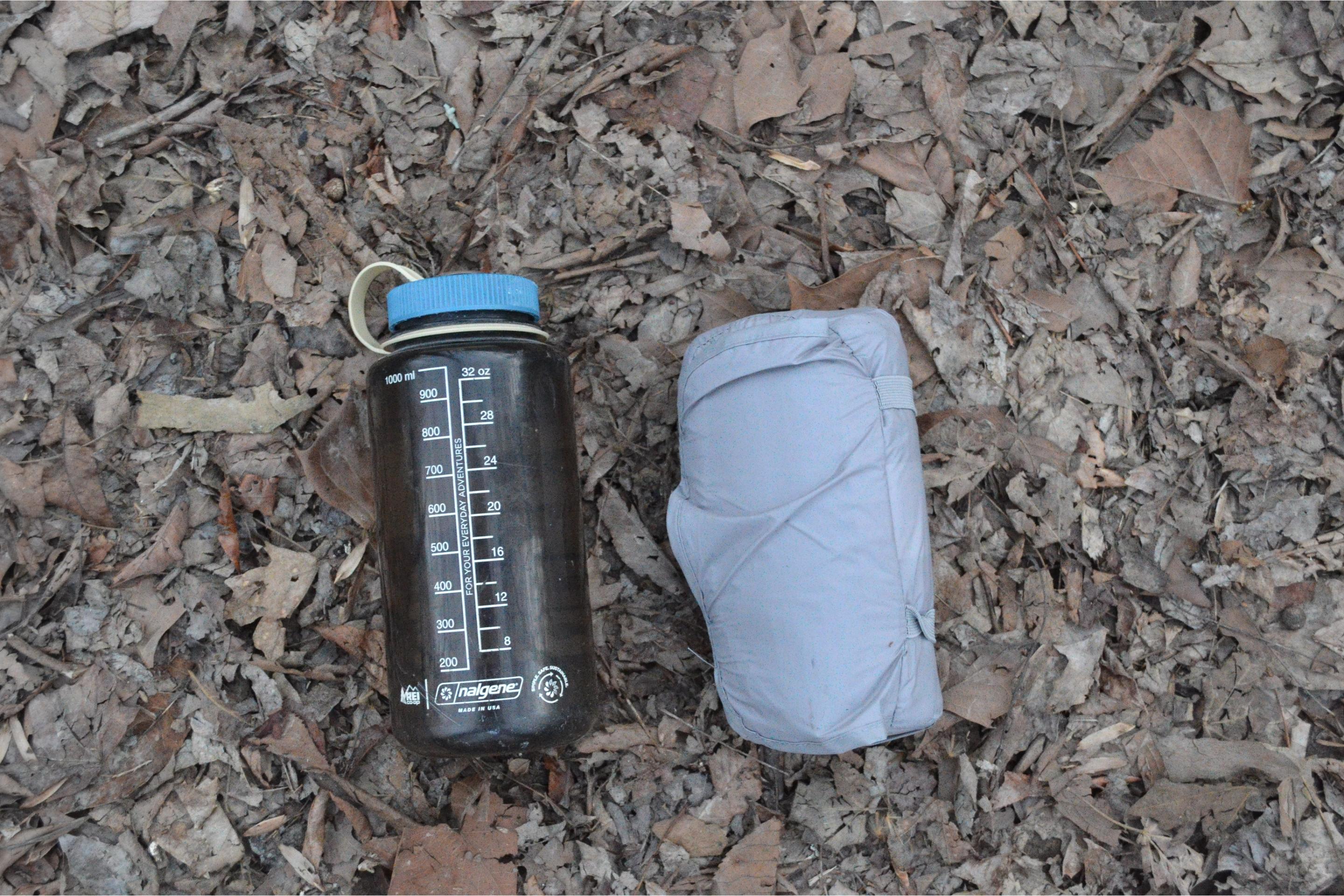
This comfortable pad packs down close to the size of a Nalgene, saving precious liters in my pack, and all with a stated warmth-to-weight ratio that’s an industry leader.
Typically known for its jackets and climbing equipment, Rab has been making inroads in the backpacking market, dropping several new sleeping bags and pads in recent years. The Ultrasphere 5 is the latest and lightest release, with new technology and design features that we had to try out.
I tested this Rab pad for several camping, climbing, and backpacking trips in Illinois and Kentucky during the fall and spring. On numerous occasions, temperatures dipped below freezing, with local weather services even declaring frost warnings. This pad served me (mostly) well through it all.
In short: The Rab Ultrasphere 5 ($255) cuts down on weight and space while still offering a highly comfortable pad. It’s not ideal for true cold-weather adventures, but for moderate temperatures in the spring and summer, it’s a perfectly adequate three-season sleeping pad. If you’re looking for a highly livable pad that won’t add any unnecessary ounces or take up too much space, the Rab Ultrasphere 5 is the ticket.
Compare the Rab Ultrasphere 5 to the options in our guide to the Best Backpacking Sleeping Pads.
Rab Ultrasphere 5 Sleeping Mat
(Photo/Rab)
Specifications
Pros & Cons
Pros
Packs down extremely small
Plenty of room for side and stomach sleepers
Lightweight
Cons
Packing up takes precision
Rab Ultrasphere 5 Sleep Mat Review
Design & Features
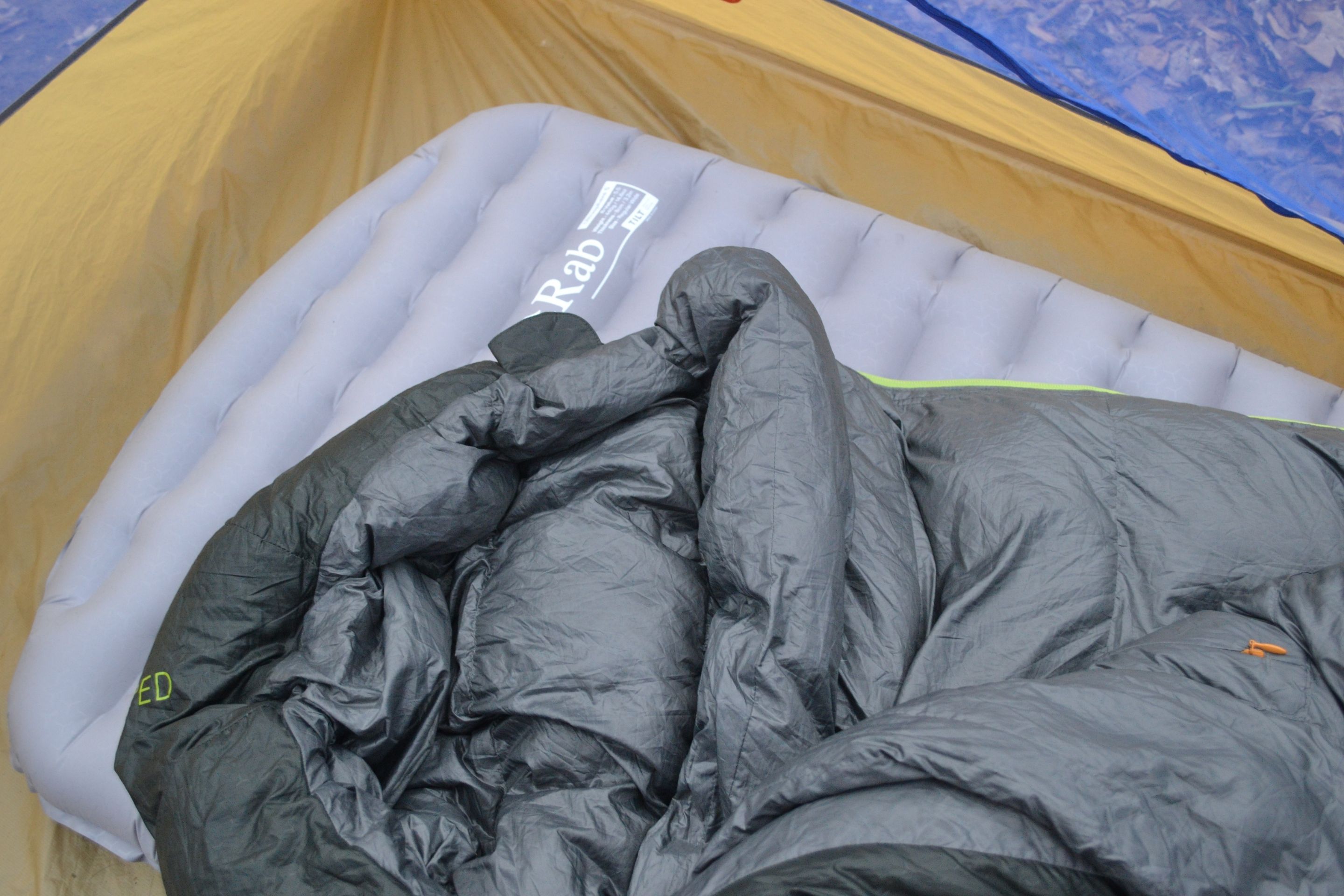
The baffle design is meant to trap heat; (photo/Mary Andino)
Rab employed two strategies to optimize the pad’s warmth-to-weight ratio. First, there are two layers of Thermo Ionic Lining Technology (TILT), the same foil-like fabric found in emergency blankets. It reflects your own heat back onto you. Then there’s the distinctive pattern of offset air chambers, which Rab says helps trap heat.
The result is a 12-ounce, 3-inch–thick pad with a 5.5 R-value, one of the best warmth-to-weight ratios on the market. GearJunkie’s top sleeping pad of 2025, the Therm-a-Rest NeoAir XLite NXT, has an R-value of 4.5 and weighs 13 ounces. NEMO’s Tensor Trail Ultralight has an R-value of 2.8 and weighs 13.9 ounces.
One of the few pads that beats out this Rab one is the Exped 6.5R. That pad weighs 12 ounces and has an R-value of 6.5.
Inflation & Packing
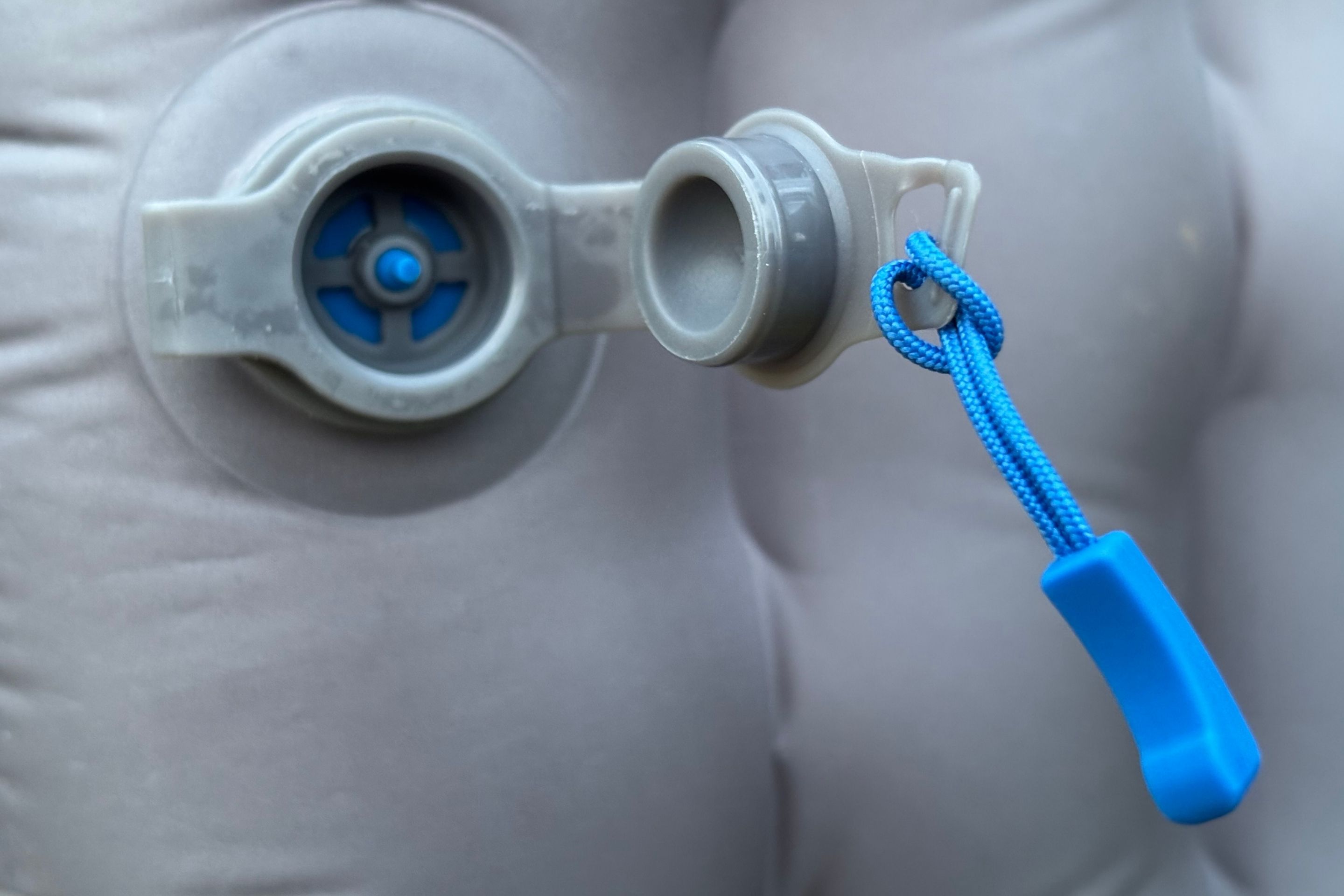
The two-way valve helps with inflating; (photo/Andrew McLemore)
The Ultrasphere 5 comes with a standard inflating sack, but personally, I find those to be more work than they’re worth. Instead, I just blew it up the old-fashioned way, and it worked just fine. It takes me about 3 minutes to fully inflate.
I always appreciate a two-way valve on a pad. The valve was also low-profile and flat enough that it wasn’t ever a problem when packing up the pad.
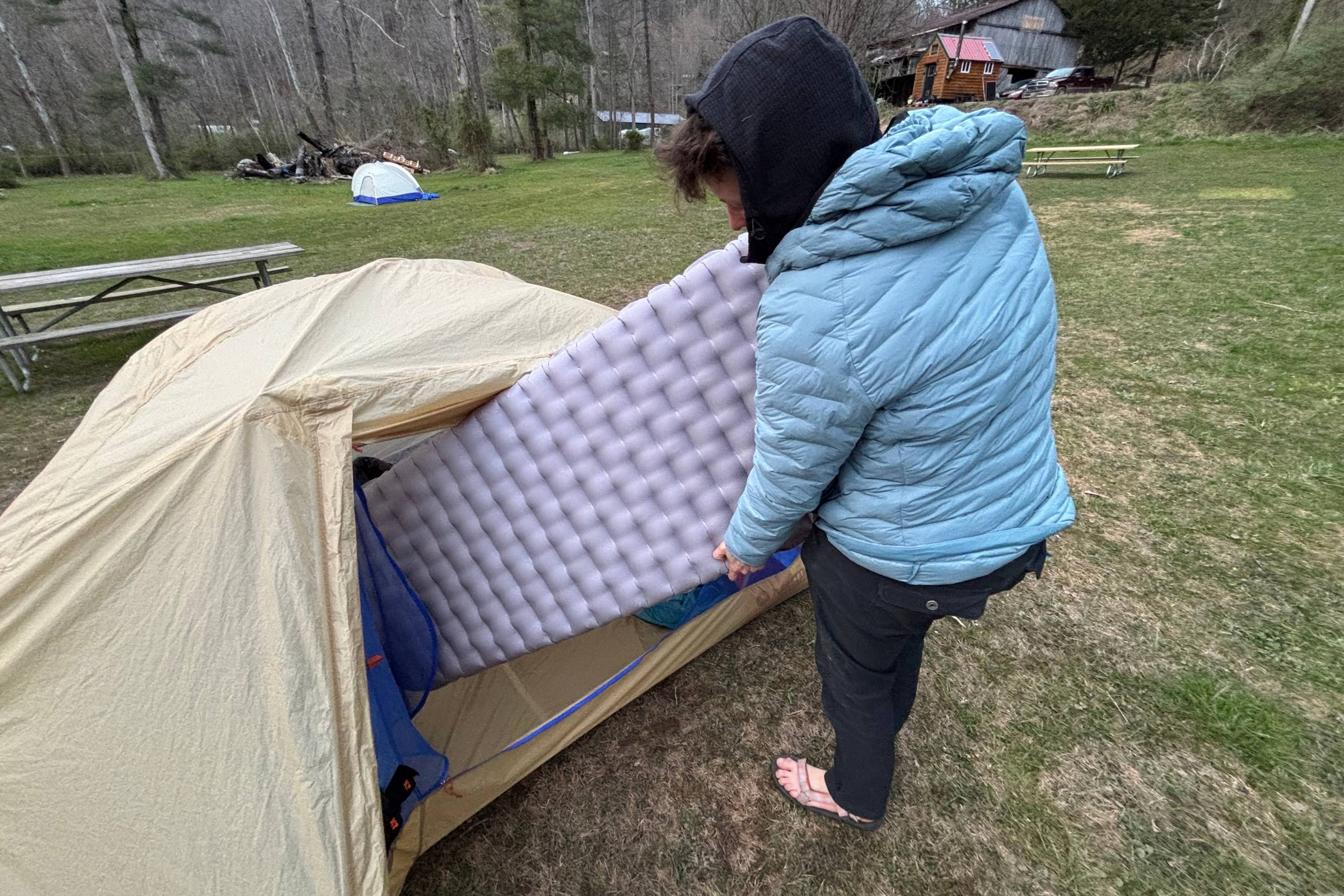
In the past, I’ve praised Rab’s burrito-style bags for how easy they make packing up the pad. This one was a little trickier. The bag is barely just big enough to fit the pad. If you don’t roll the pad exactly right, it’s not going to fit.
I had to fold it in half vertically, smush out all the air, fold it in half again, and then roll it up very tightly to get it into the bag. On trips where I was car camping, I found myself actively avoiding rolling the pad up, instead just stuffing it in my duffel bag. A slightly larger bag would’ve made things a whole lot easier.
That said, once you get the pad in the bag, it’s amazing how small it is. It’s just 7.1 inches x 3.5 inches, about 3/4 the size of a Nalgene water bottle. I’ve downsized my pack in recent years, going from an Osprey Ariel 70 to a Gossamer Gear Mariposa 60. Ten fewer liters means that space is at an absolute premium, so I will take (and appreciate) all the space savings I can get.
Comfort & Sleeping
The pad was plenty long enough for me; (photo/Andrew McLemore)
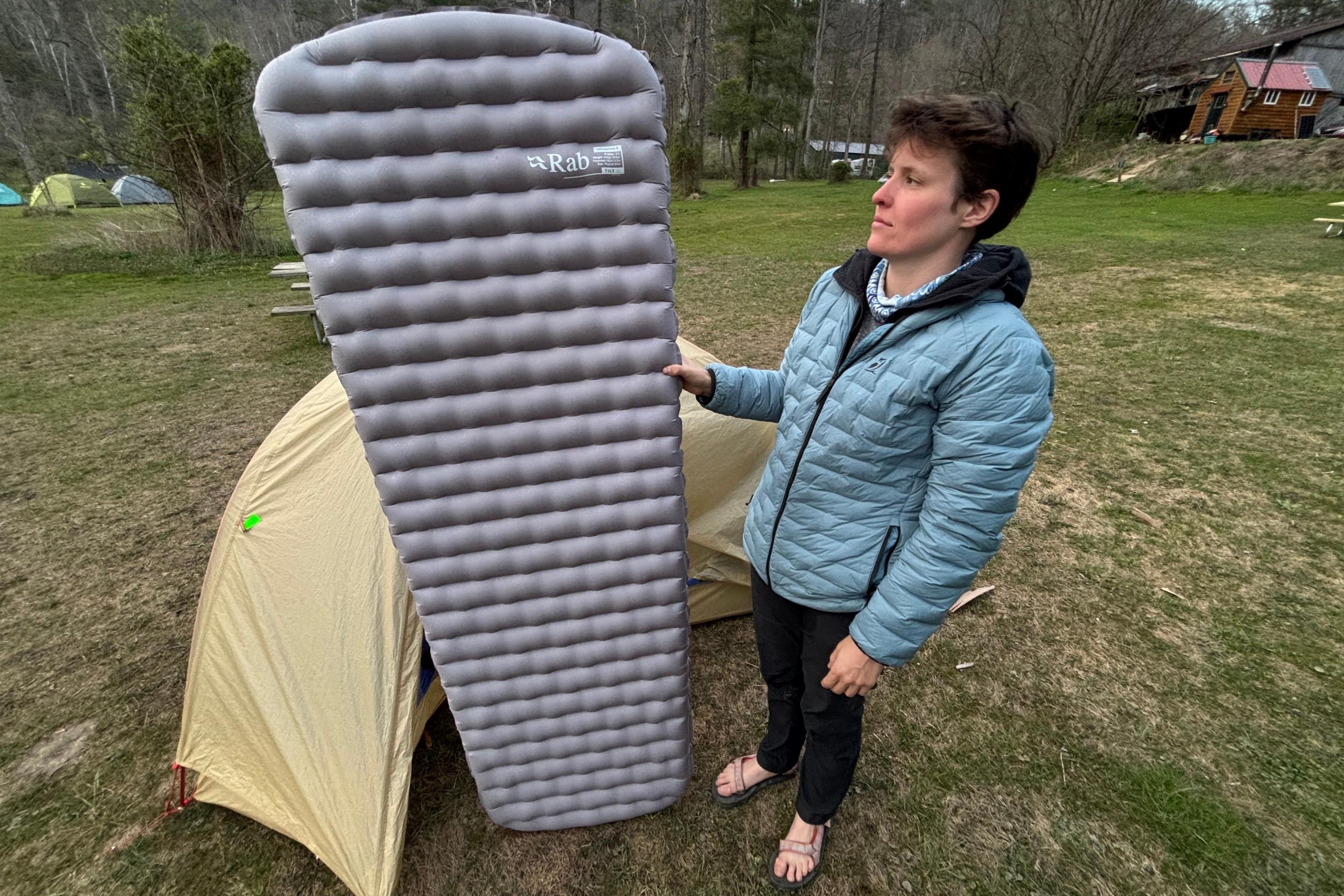
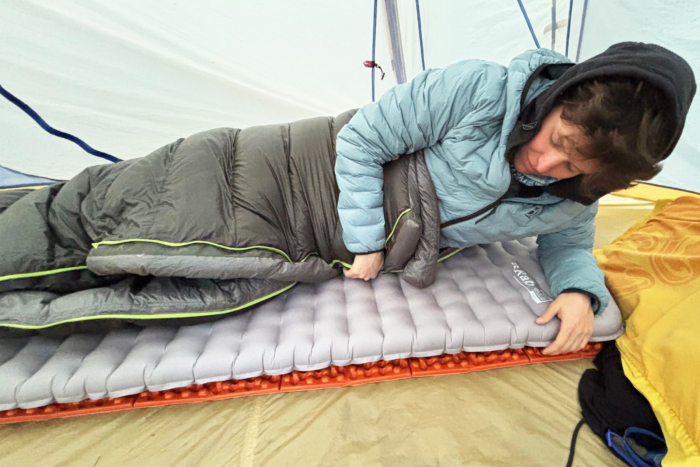
Like many other sleeping pads, the Ultrasphere 5 has a tapered mummy shape, with the widest point at the shoulders. This shape shaves off ounces and saves space. On other pads, I find the mummy shape to be too extreme, with not enough space for my legs. This one was spacious enough, though, that I wasn’t constantly spilling off of it.
As a combo of a side and stomach sleeper, I never felt like I didn’t have enough room. I’m 5’6″, and the regular size was plenty large enough. If you’re taller or need more space, there are wide and long versions that cost an extra $20.
Unlike other pads, this one is remarkably quiet and non-crinkly. I am a light sleeper who also tosses and turns, so I loved how little sound it made. I was concerned that the baffling would feel weird to lie on (like there were big gaps on my back), but I never even noticed them. For me, this design is preferable to the long vertical baffles that some pads use, which can press into my spine.
A Question on Warmth
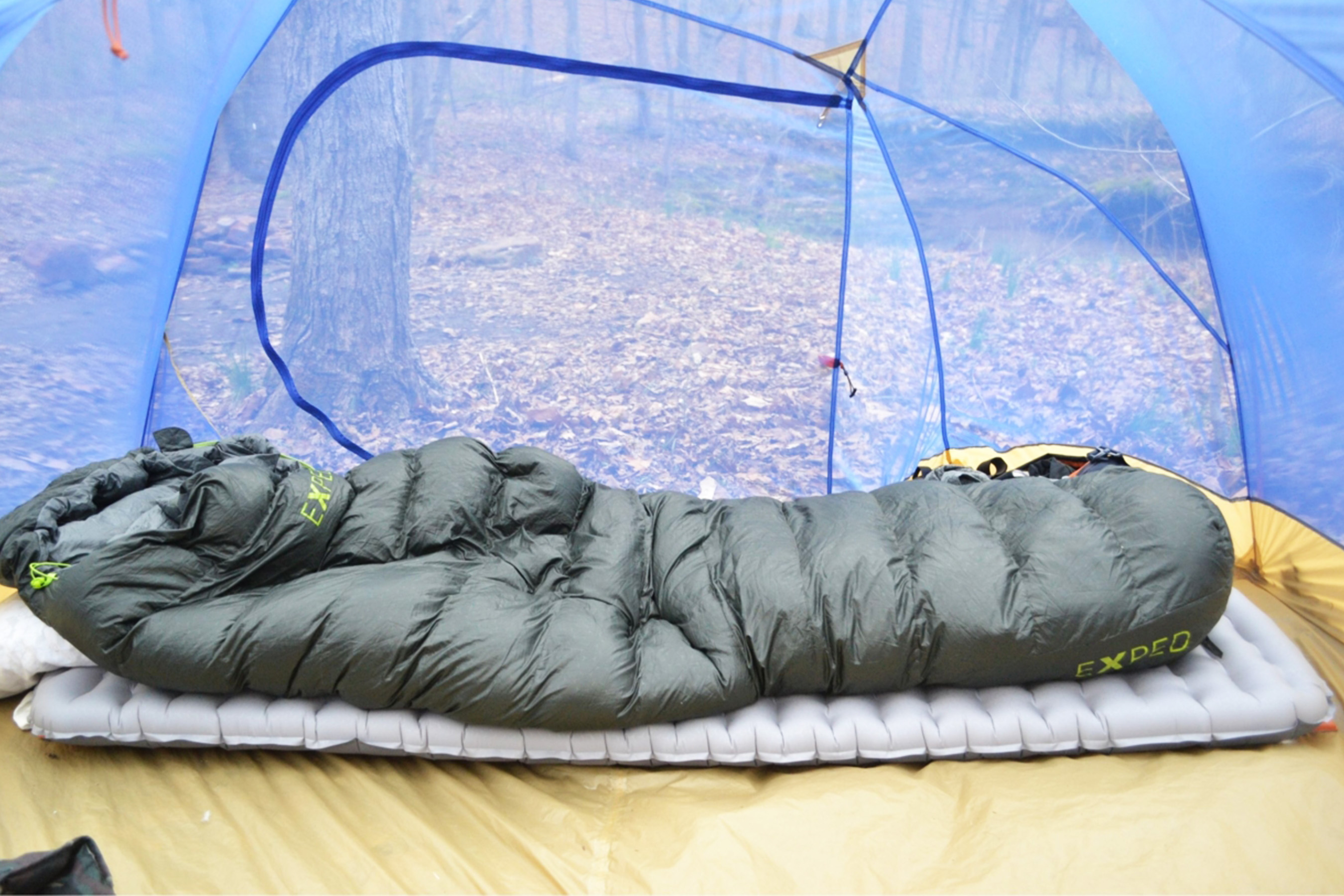
Rab says this pad has an R-value of 5.5, which means it pretty solidly falls into the three-season pad category. While not suitable for extreme winter conditions, this pad should provide adequate insulation during chilly fall and spring nights.
In reality, I wasn’t convinced. I got colder than expected. I’ve slept on pads with lower R-values during unexpected snowstorms and didn’t feel as cold. While camping in Kentucky in March, temperatures dipped slightly below freezing on several nights. Even with the Rab pad, a 0-degree sleeping bag, and long underwear, I was cold. I added a sleeping bag liner and hooded fleece, and that was still barely enough to stop me from shivering, and I typically run warm.
If I had to choose a pad to bring with me to high alpine environments or on hikes with unpredictable weather, I’d probably pick a different one. After one too many freezing nights, I’m limiting my use of the Rab pad to warm conditions only.
Durability
The last time I tested a Rab sleeping pad, the Rab Hypersphere Ultra 7.5, disaster struck. It got punctured on flat ground, and I wasn’t able to patch it, resulting in a terrible night’s sleep on the cold, hard ground. This time around, luckily, the Ultrasphere 5 and I didn’t suffer a similar fate. Even with my dogs lounging on the pad, it suffered no noticeable damage.
The pad’s gray color means stains show easily. After 3 days of climbing in Illinois without a shower, my sweat, sunscreen, bug spray, and who knows what else left some distinct blotches on the face fabric.
A Note on Price
The regular size of the Ultrasphere 5 retails for $255. Compared to GJ’s best backpacking sleeping pads, that price tag is on the higher side. Our top pick, the Therm-a-Rest NeoAir XLite NXT, retails for $210. The Big Agnes Rapide SL, a top-performing pad that I’ve reviewed in the past, costs $170.
Even NEMO’s highest-end pad, the Tensor Extreme Conditions Ultralight, costs only $260 and has an R-value of 8.5, weighing just 1 pound, 2 ounces. While the price of the Ultrasphere 5 isn’t outrageously expensive compared to the competition, it definitely doesn’t qualify as a budget pick.
Rab Ultrasphere 5 Sleep Pad: Who It Is For
If the Rab Ultrasphere 5’s stated R-value is true (which I’m not convinced it is), the pad definitely has one of the best warmth-to-weight ratios on the market. Even if it isn’t as warm as it says, the pad would still be a great spring and summer backpacking pad. After all, it weighs less than a pound, a rarity on the market. This pad will definitely appeal to thru-hikers and ultra-lighters who count every ounce.
Considering it takes up about as much space as a summit tallboy beer can, it’s hard not to love just how compact the pad is. If you can roll it up with the required surgical-level precision, you’ll never have to worry about finding space in your pack for your puffy or an extra fuel canister.
With ample sleeping space and a quiet profile, the Ultrasphere offers a comfortable place to sleep after a long day of hiking or climbing. If you’re looking for space savings and the pricetag doesn’t scare you off, the Rab Ultrasphere 5 is a great pick for backpacking adventures.