


May 2, 2026
Early this morning, and not unexpectedly, the long-beleagured Spirit Airlines closed its doors, retiring to that big tarmac in the sky. The company had been in and out of bankruptcy, and never really regained their footing after the COVID pandemic.
This leaves Frontier, or maybe Allegiant Air, to take on the brunt of snarky social media posts and late-night TV jokes.
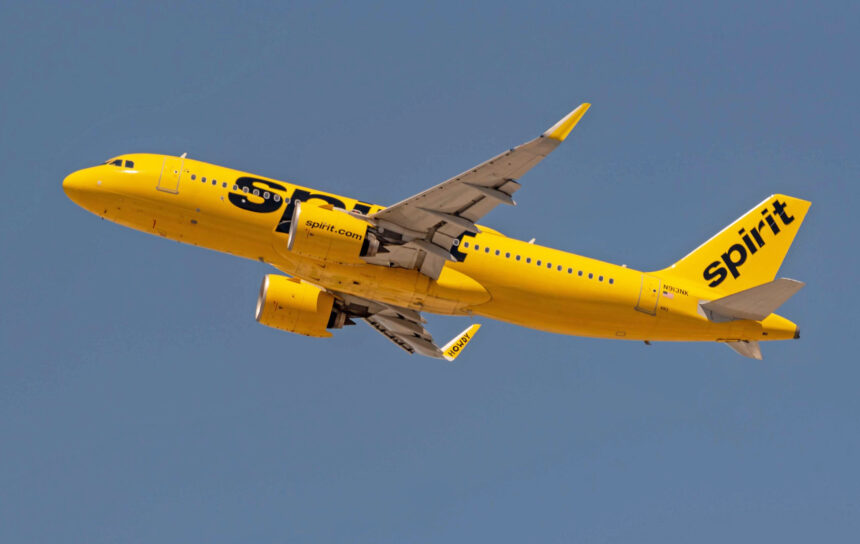
Spirit, with its bare-bones service and ultra cheap fares, was easy to make fun of. They were also the nation’s seventh-largest airline (and presumably its largest purchaser of yellow paint), with a fleet of 130 aircraft and 17,000 employees, virtually all of whom are now jobless.
If I’m counting right, this is the most significant U.S. airline liquidation since the demise of Pan Am 35 years ago. And the first in quite some time.
Dozens of U.S. airlines, including some of the biggest, have disappeared since the industry was deregulated in 1979. This has happened a couple of different ways, one more catastrophic than the other.
The first was through mergers or acquisitions. TWA, for example, was bought by American. Republic, Northwest, Continental, PSA, Piedmont, Western, all were subsumed into another entity. The list is long. The names went away, but most of the jobs were saved, planes repainted.
Others, however, have shut down outright, ceasing operations completely. Braniff, Pan Am, and Eastern are the most significant names on this sadder roster. Air Florida, Frontier (the original one), American Trans Air, Midway, Comair. And others. Spirit joins them.
The remaining airlines (and creditors) will pick through Spirit’s bones. Carriers like JetBlue will expand capacity in certain markets, hire some former Spirit workers. Still, thousands will remain unemployed. Airline shutdowns are seismic, their effects rippling through the economy.
Notice posted on the Spirit Airlines Instagram account.
I lived through an airline shutdown, albeit one you’ve never heard of. It wasn’t fun.
From 1990 to 1994 I flew for a Maine-based regional airline called Northeast Express. We were a feeder for Northwest, funneling passengers into their Boston hub from as far north as Prince Edward Island and as far south as Norfolk.
Trouble was, we weren’t the tightest ship or the most reliable of partners, and in the summer of ’94 Northwest pulled its code-share agreement, knocking us into immediate bankruptcy.
We hobbled along for a few weeks under the protections of Chapter 11 until closing doors forever one sunny afternoon in July. I’d gone in to fly that day and was waiting for the plane to arrive when word came that all remaining flights were canceled. I remember exactly where I was standing: in the ops room, looking through the cutout into the cubicle where the ramp coordinators shouted into their radios.
“That’s all she wrote,” announced one of them.
I felt weirdly abandoned, alone, floating in some stark new reality that I wanted no part of. All the day-to-day structure that a job gives you, not to mention a salary, had vanished in a moment. What are we supposed to do? I wondered. I may even have said it out loud.
Go home, was the answer.
Outside on the tarmac, the baggage loaders were dropping suitcases where they stood, turning and walking away, the motors in their tugs still humming.
My final two paychecks bounced. I never got a dime for the last thirty or so days that I worked.
Airplane photos courtesy of Michael Saporito.
The post Spirit in the Sky appeared first on AskThePilot.com.