

It isn’t usually considered one of Africa’s top cycling destinations, but we absolutely loved our month of bike touring Mozambique!
Endless stretches of white-sand beach, fantastic food, and an infectious energy give Mozambique a character all of its own. Buildings are painted in bright colours, music seems to be everywhere, and there’s a warmth and vibrancy that’s hard to describe until you experience it.
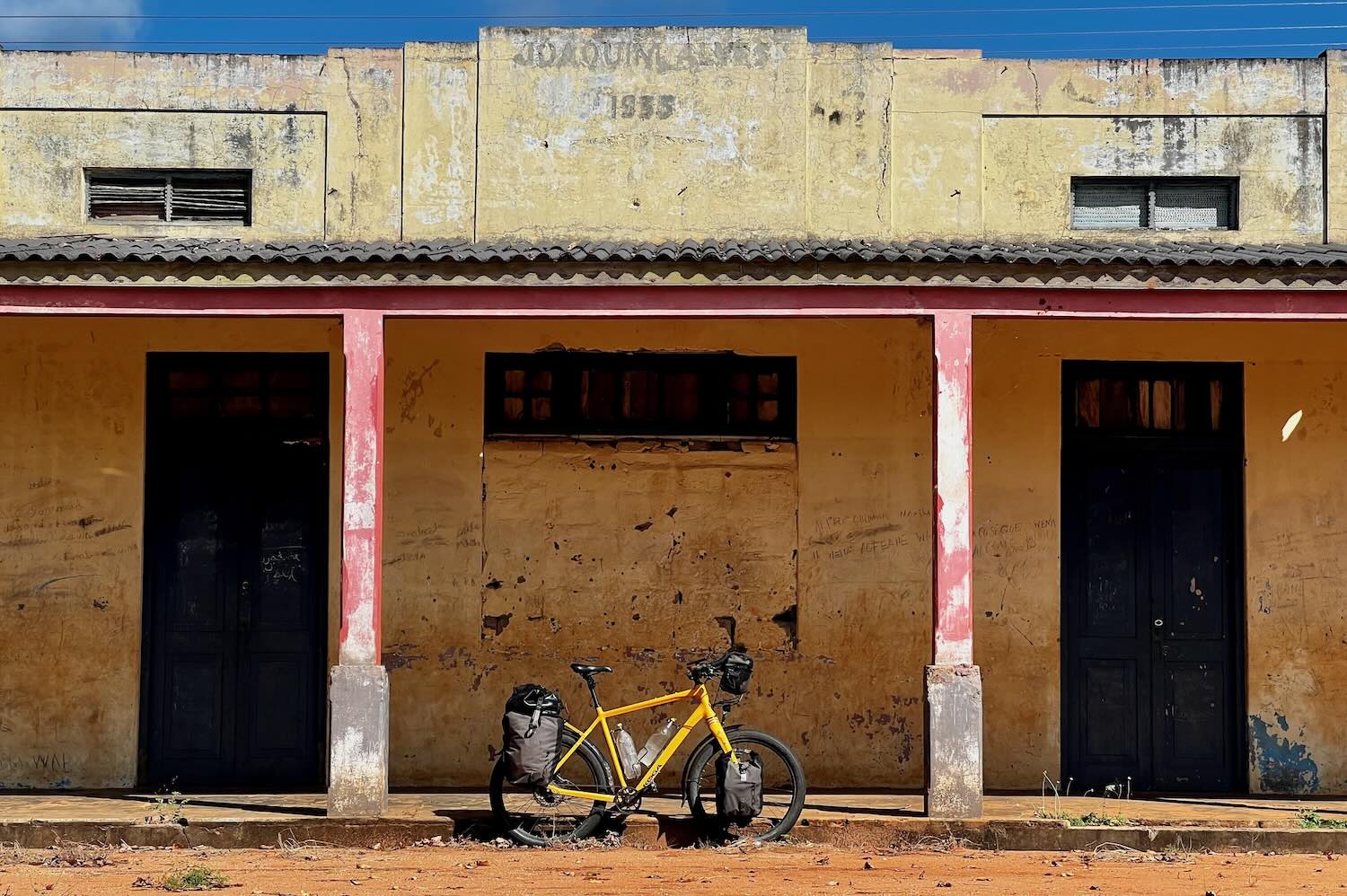
Portuguese colonial influence is still woven through the food, music, and daily life, creating a striking contrast to much of the surrounding region.
For long-distance travel, the paved highway that runs much of the country’s length is often the most practical option, as many secondary roads are deep sand and difficult even on wide tyres. That might sound uninspiring, but covering quick kilometres through a culture so different from its neighbours was more than enough for us to fall in love with the experience.
We cycled around 1,400 kilometres in Mozambique, with roughly 1,000 km of that spent on the EN1. At times, it could feel a little repetitive, but the coastal atmosphere, lively culture, and exceptional food made bike touring in Mozambique wonderful.
Mozambique At a Glance
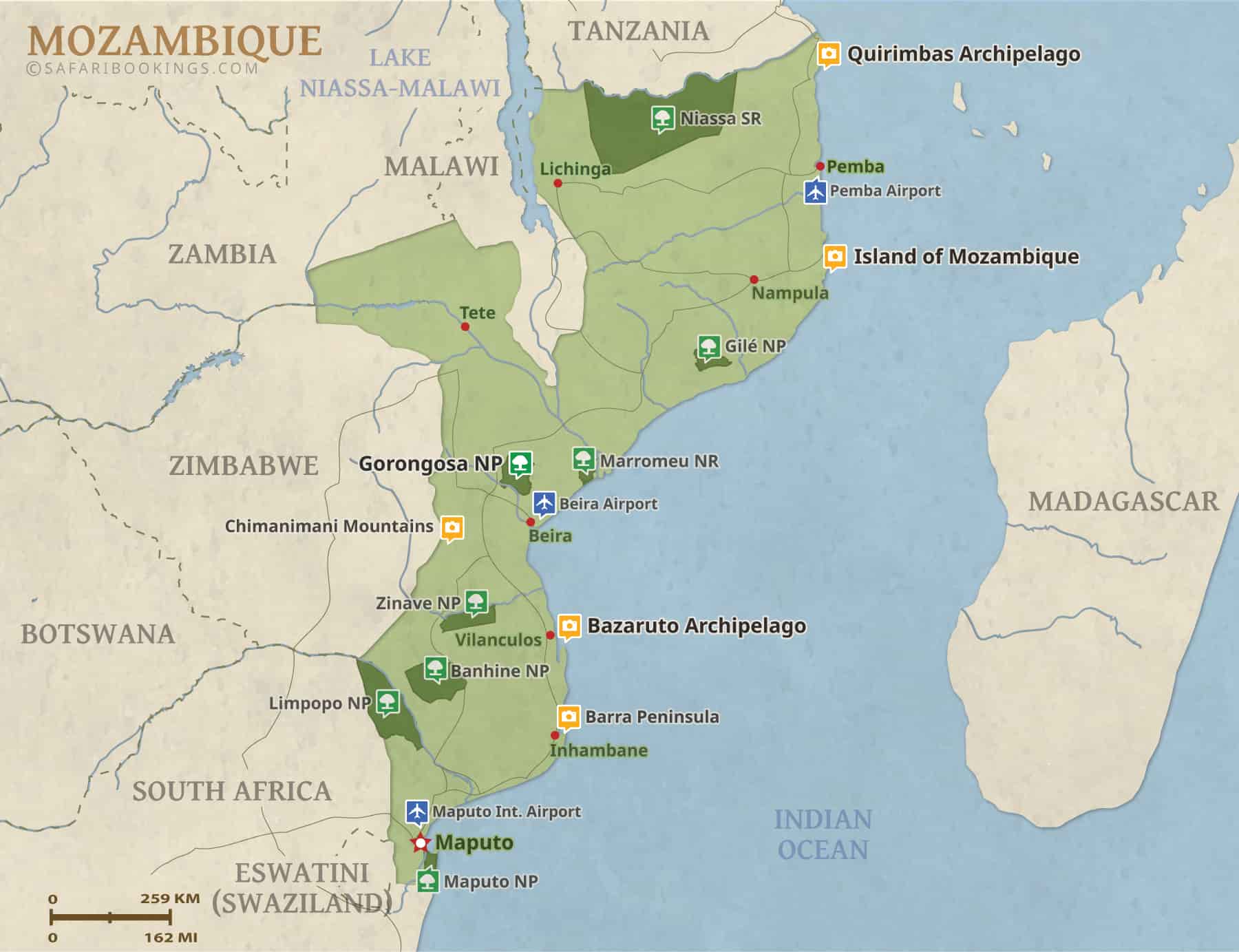
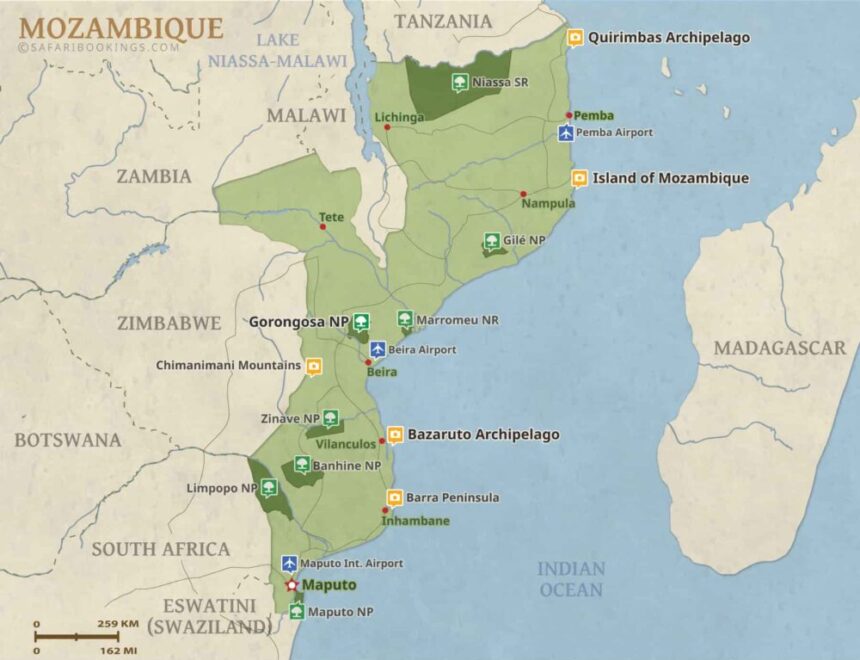
Mozambique is a long, beach-fringed paradise stretching from South Africa in the south to Tanzania in the north, while also bordering six inland countries along the way. Running for more than 1,600 km from north to south along the Indian Ocean, it is roughly the same size as Turkey.
Portuguese is the official language and is taught in schools, but for many people, their first language is one of the country’s many local languages, most of which belong to the Bantu family. In tourist areas, you may find some English speakers, but knowing a few Portuguese phrases goes a long way — especially when bargaining for fruit and vegetables in markets.
Mozambican cuisine is a delicious blend of African traditions and Portuguese influence. Peri-peri sauce, coconut milk, and cashew nuts are staples, and we found the food to be some of our favourites in East Africa. A particular highlight was the crusty ciabatta rolls, which you can find even in surprisingly small villages.
Safety in Mozambique
With fertile soil, reliable rainfall, deep-water ports, and abundant natural resources such as petroleum and natural gas, Mozambique has many of the ingredients to be one of Africa’s most prosperous countries. However, decades of political instability, conflict, and corruption have slowed its development. The civil war that lasted from 1977 to 1992 displaced millions of people and left deep, long-term impacts across the country.
Since the war ended, Mozambique’s security situation has improved significantly, though challenges remain. One lasting legacy of the conflict is unexploded landmines in some former conflict areas. While major routes and populated regions have been widely cleared, it’s still wise to be cautious when wild camping or hiking off established paths. Stick to obvious tracks, known camping areas, or places where there are clear signs of regular use.
Today, much of Mozambique is generally safe to travel, especially along the EN1 corridor and in southern and central regions. However, parts of the far north (particularly Cabo Delgado Province) have experienced insurgent violence in recent years. Political protests and unrest can also occasionally disrupt travel, especially around election periods.
Before travelling, it’s a good idea to check current government travel advisories. We’ve found sources such as the US State Department and Australia’s Smartraveller useful for broad guidance. Because Mozambique is also a popular destination for South Africans, regional Facebook and WhatsApp travel groups can be helpful for real-time local updates on road conditions, demonstrations, or border issues.
Top Places to Visit
Maputo
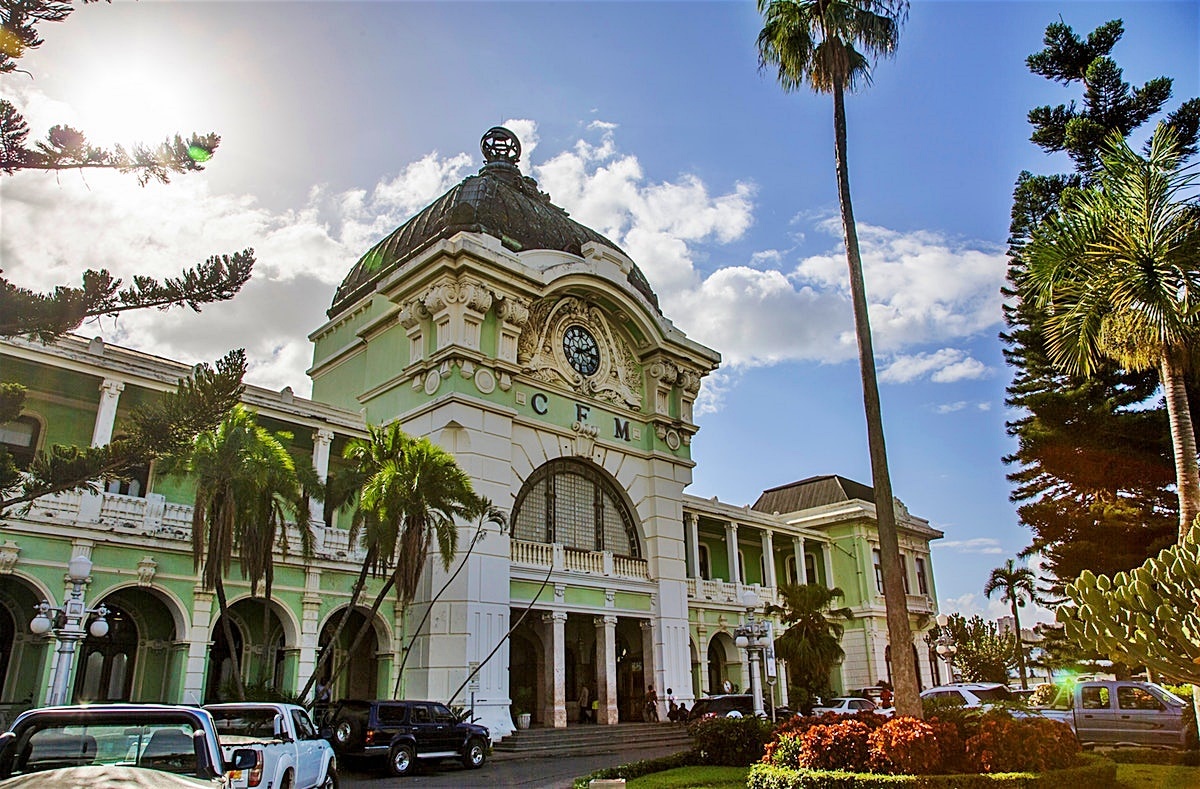
One of Africa’s more beautiful capital cities, Maputo stands out with its colourful murals, flame-tree-lined avenues, lively music and arts scene, and faded colonial architecture. It has a very different atmosphere from neighbouring capitals such as Harare or Johannesburg.
While it is still a busy and traffic-filled city, it’s well worth spending a couple of days here to rest, reset, and soak up the atmosphere.
Tofo
Tofo is an idyllic stretch of white sand beach lined with palm trees, with excellent cafés and restaurants right by the ocean.
If that isn’t enough to tempt you, it was also home to the best hostel we stayed at in Africa so far (Kitesurf Tofo House) and the best cinnamon buns too. It’s an ideal place for a rest stop, with plenty of accommodation, dining options, and activities to choose from.
Vilanculos
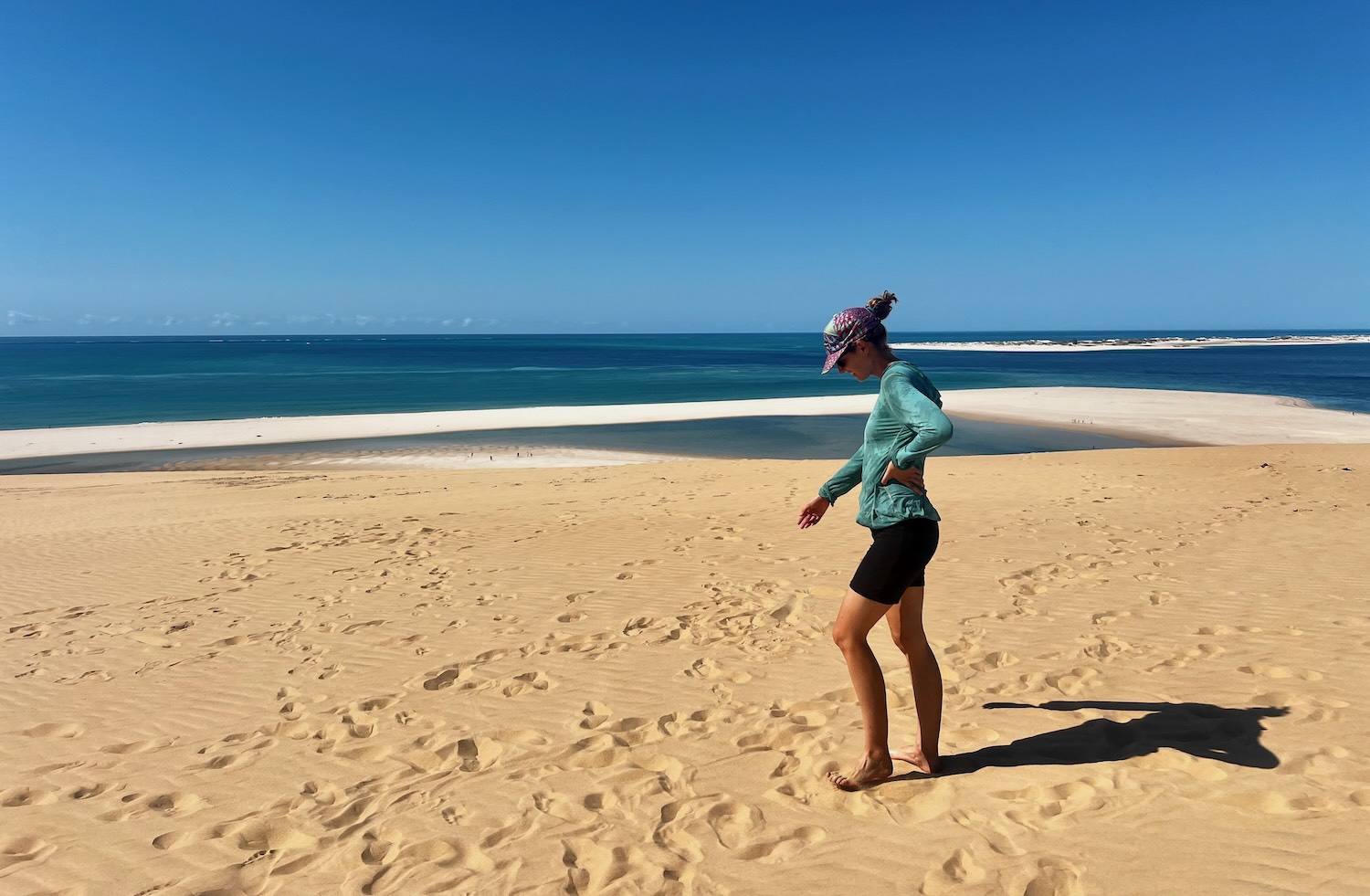
Vilanculos is a larger beach town with the same laid-back atmosphere and great food, but with the bonus of easy access to the Bazaruto Archipelago. This island group is perfect for day trips, offering excellent snorkelling, beautiful beaches, and scenic dune walks.
We also really enjoyed staying at Baobab Beach Backpackers, which had delicious food, a social atmosphere, reliable Starlink internet, and a shaded, comfortable campground.
Where Did We Go Bike Touring in Mozambique?
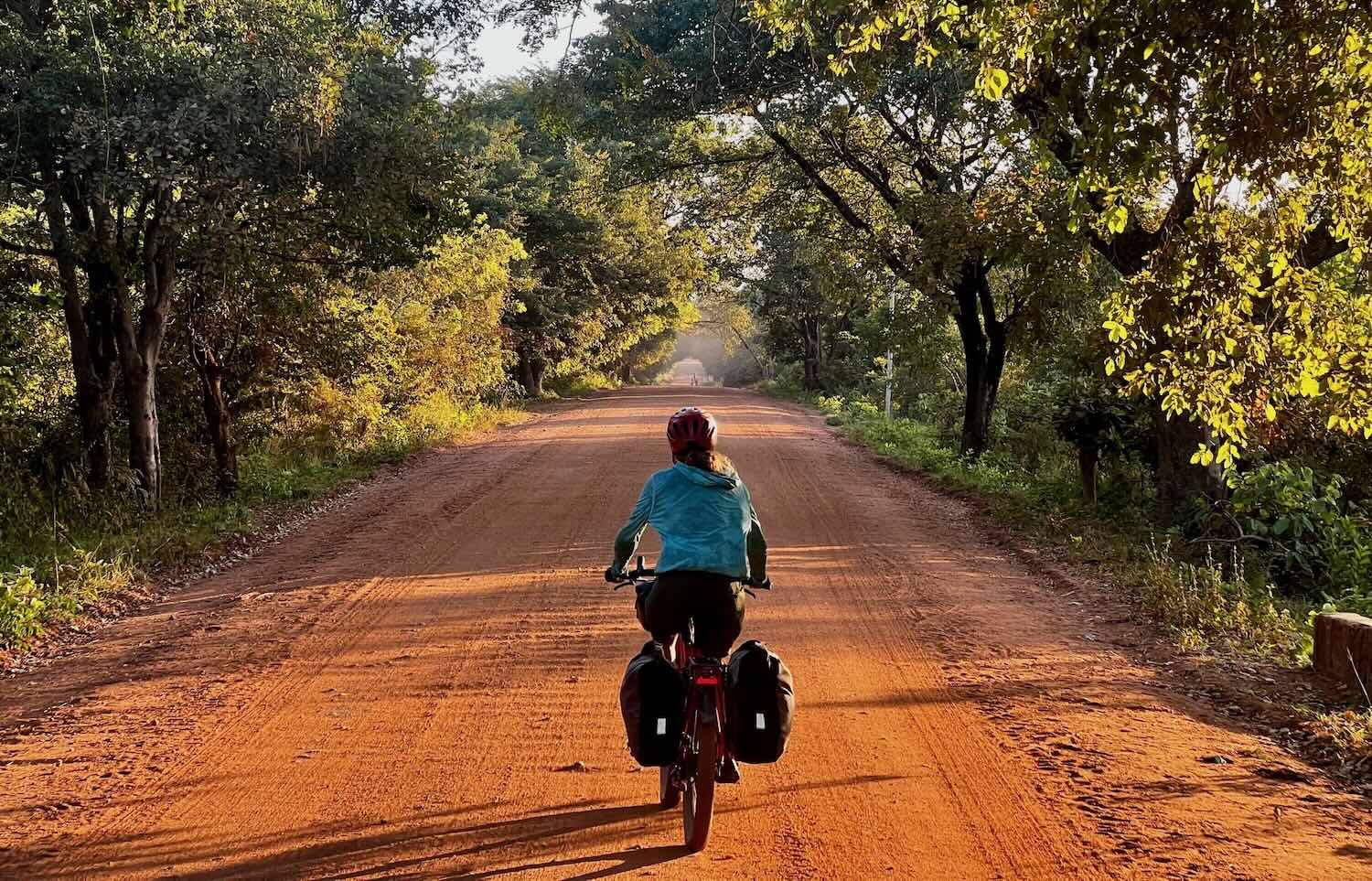
While remote dirt roads are usually what we seek out, Mozambique doesn’t always offer that luxury. Instead, we spent around 1,200 km riding the EN1, the country’s main north–south highway, passing through sleepy villages selling pineapples and cashews along the roadside.
We ate lunch at small local restaurants serving avocado soup and coconut-milk-rich dishes, and spent time in the wonderful beach towns of Tofo and Vilanculos.
From there, we turned inland onto roads that were often more pothole than pavement, before eventually leaving the tarmac behind and climbing toward the highlands on dirt roads. Our journey through Mozambique ended when we crossed into Zimbabwe at the Mutare border.
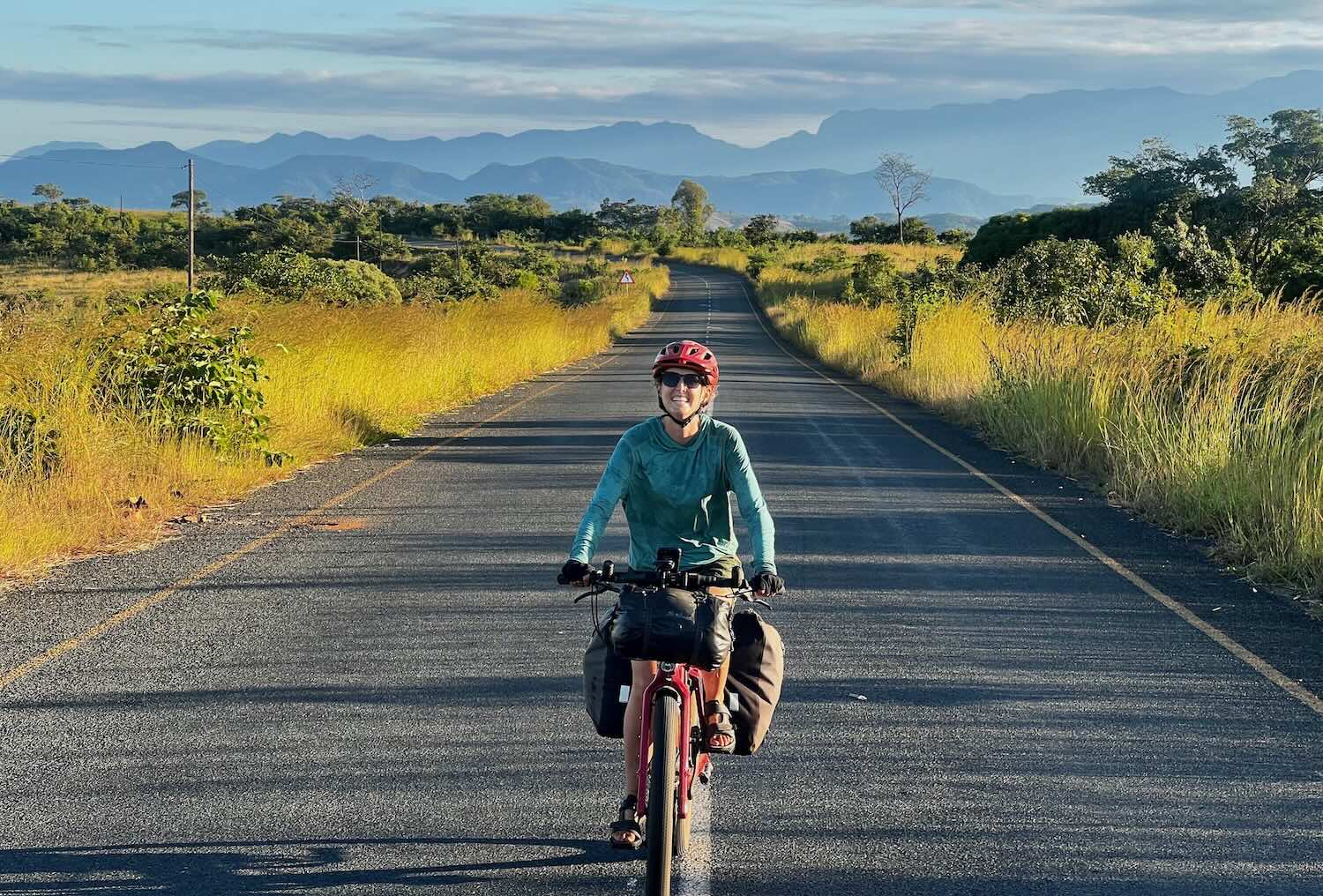
Before arriving, we were nervous about cycling what is essentially the country’s main transport artery, stretching from Maputo in the south toward Malawi in the north. In reality, once we left Maputo behind, we found the EN1 surprisingly enjoyable to ride, with relatively light traffic and a generous shoulder for most of the way.
You can see our bike touring route HERE.
Best Time to Travel in Mozambique?
There isn’t really a wrong time to visit Mozambique. Temperatures along the coast are generally moderated by the ocean, the EN1 is paved, and there are plenty of small restaurants and shelters to duck into, making it a relatively easy country to cycle even during wetter periods.
The rainy season typically runs from November to May. That said, mango season overlaps from roughly November to January, and the abundance of fresh roadside mangoes is honestly reason enough to visit during that time alone.
What Bike is Best for Mozambique?
Riding in Mozambique is generally flat and mostly paved. That said, certain sections of the EN1 north of Vilanculos are in a pothole-riddled state, and at times, we found ourselves moving faster than cars over 200+ km stretches.
The country’s biggest draw is its pristine white-sand coastline. The main challenge is that, aside from places like Tofo and Vilanculos, many of the best beaches are accessed via extremely sandy tracks. Even with wide tyres, we sometimes struggled. And we were running 2.8” tyres!
In reality, if your goal is to enjoy Mozambique rather than specifically reach every remote beach by bike, a gravel bike is more than sufficient for the EN1 and general touring. For the deep sand sections leading to the most isolated beaches, it’s often more practical to hitch a lift on a motorbike or transfer, then explore on foot or by bike once you’re there.
What To Bring To Mozambique
You don’t need much to travel in Mozambique. In fact, you could easily manage without a stove or tent if you’re willing to plan ahead and sleep in towns each night.
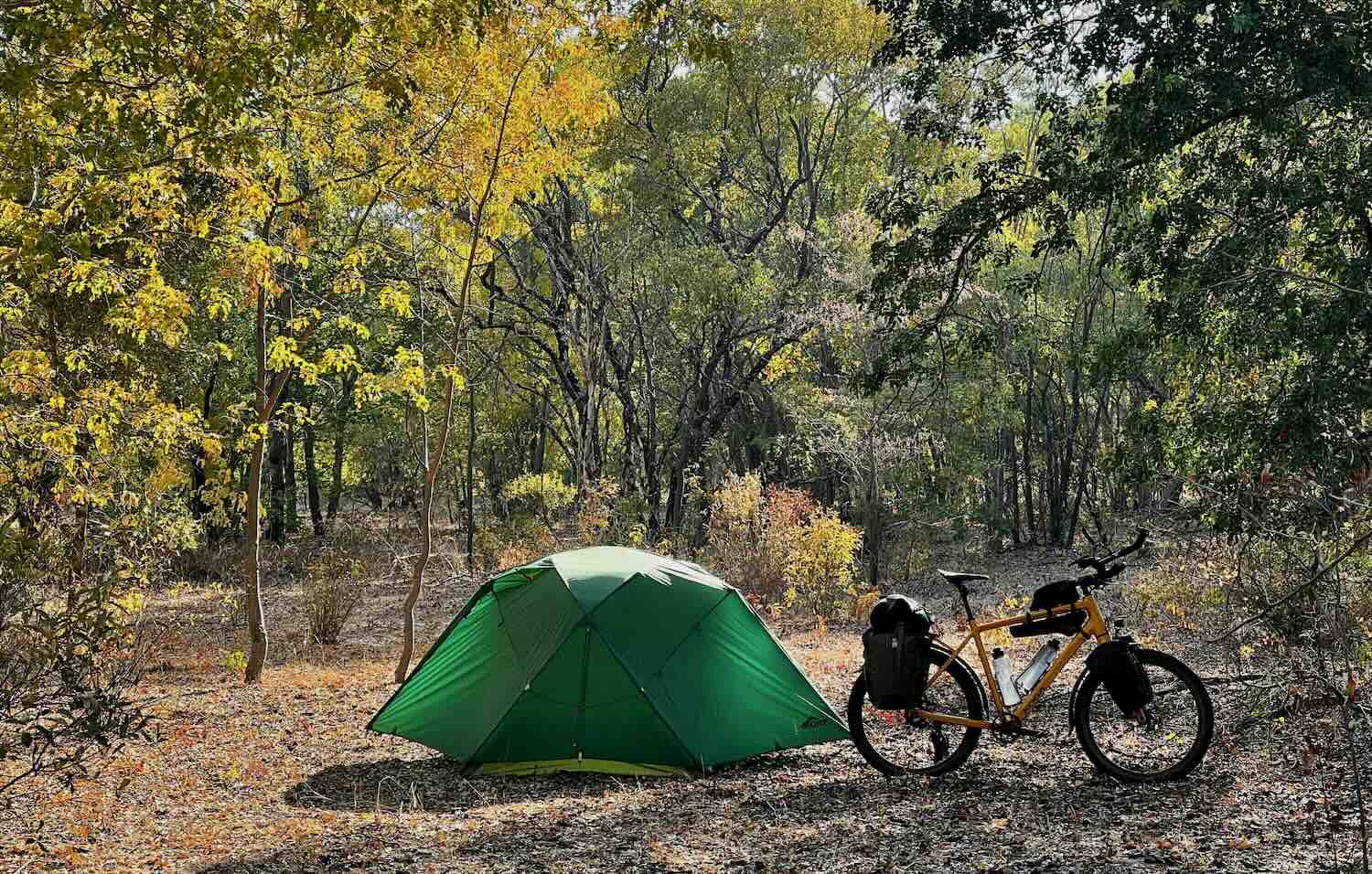
That said, a tent is still useful, if only because even the nicer beach towns often have inexpensive campgrounds attached to hostels and hotels.
Food in Mozambique
The food in Mozambique is genuinely excellent. Coconut milk and peri-peri hot sauce are used generously, giving many dishes a rich, spicy flavour.
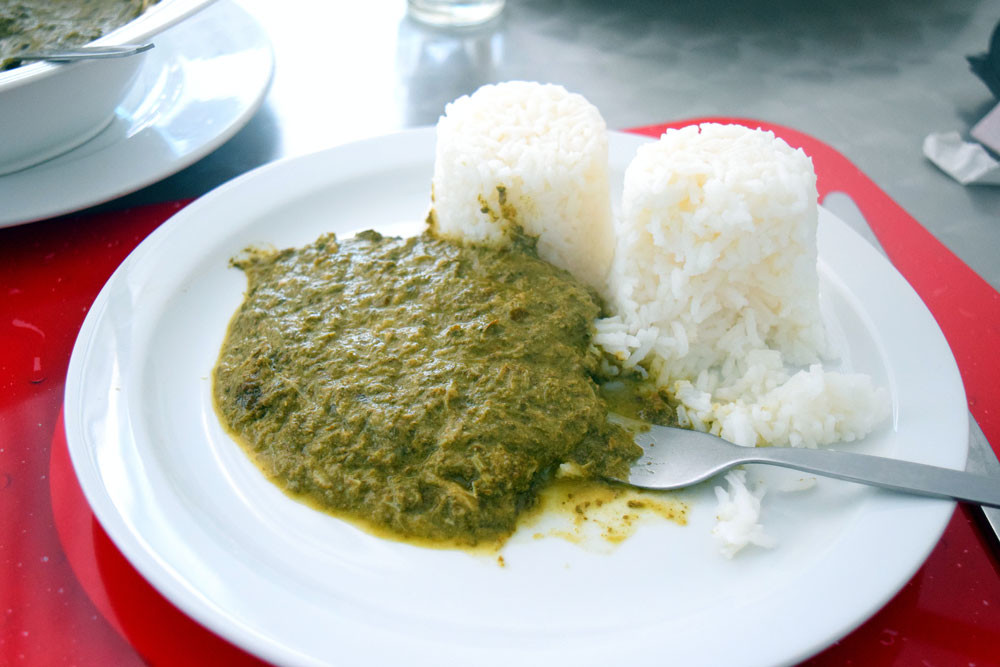
Our favourite was matapa, made from cassava leaves cooked in coconut milk with peanuts. We often found ourselves eating lunch at local restaurants every couple of days, even if it meant a long wait while the food was being prepared.
Beyond the main dishes, the bread is outstanding. Easily, the best we’ve had in Africa. Even in small villages, you’ll often find vendors selling fresh, crusty ciabatta. It’s the kind of thing you still think about long after leaving. Cashews, fresh fruit, vegetables, coconut milk, and peri-peri sauces are also widely available.
One difference compared to much of East Africa is that you’ll usually need to bargain when buying fruit and vegetables. Prices often start incredibly high but tend to come down quickly with a bit of negotiation.
Accommodation & Camping
South Africans love the laid-back beach vibe of Mozambique, and with direct flights from Portugal into Maputo, the country attracts a steady stream of international tourists. As a result, tourism infrastructure is generally of high quality, but this also makes Mozambique slightly more expensive to travel in compared to neighbouring countries.
A hostel bed in tourist hubs such as Maputo or Tofo typically costs around US $15. In smaller towns, hotel rooms usually range from US $10 to $40 per night, with prices often negotiable outside of major tourist areas.
The higher price point does come with good value: reliable Starlink internet, comfortable beds, and hot water are increasingly common in international tourist-oriented accommodation. We really enjoyed the improved infrastructure and the opportunity to meet other travellers in hostels, even if we stayed in them less frequently.
Because Mozambique is a popular overlanding route for South Africans, many hotels and hostels also offer inexpensive camping options. One of our favourites was Baobab Beach Backpackers, where the campsite was quiet, dark at night, and had Starlink access.
Wild camping in Mozambique can be challenging since much of the population lives along the EN1. That said, it is far from impossible; it just requires a bit of planning. Our usual approach was to check Google satellite imagery an hour or two before sunset, look for areas without houses, and aim for those as a potential campsite.
However, as mentioned earlier, there are still unexploded landmines in parts of Mozambique, so it’s essential to ensure you are only camping in areas where people clearly walk or pass regularly, and avoid venturing into untouched or overgrown land.
Additional Considerations
Mozambique’s national beer, Laurentina, is perhaps our favourite national beer we’ve tried anywhere in Africa so far. It’s widely available and a perfect end-of-day reward after a long ride.
Visa costs in Mozambique can be frustratingly inconsistent. Laura (American passport) paid around US $12 to enter, while Alee (Australian passport) paid roughly US $180 for the visa. This kind of disparity appears common for many nationalities, often without any clear explanation. We would have liked to stay longer, but extending a 30-day Australian visa would have cost another US $180, which made it hard to justify.
Before arriving, many South Africans warned us about frequent police checkpoints and the expectation of bribes. While checkpoints were indeed common along the roads, we were never stopped, and we didn’t encounter any requests for bribes during our time in Mozambique.
The post Bike Touring Mozambique: Beaches, Culture and a Country We Didn’t Expect to Love appeared first on CYCLINGABOUT.com.
Read more:CYCLINGABOUT.com