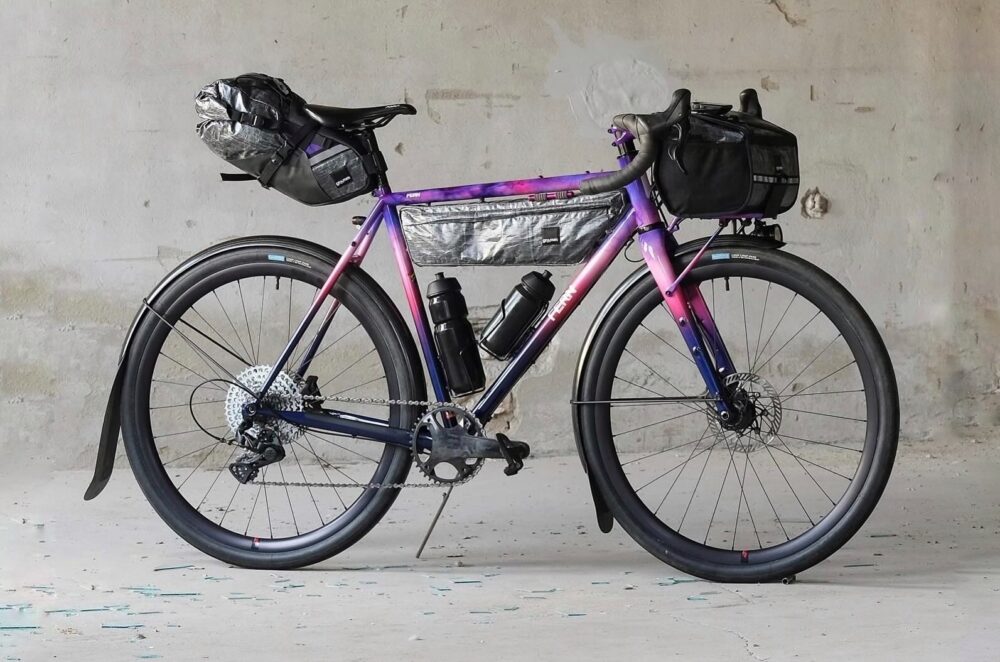


Bicycle touring is one of the most rewarding ways to see and experience the world. And since the bike shapes part of that experience, I’m going to show you the best touring bikes available, with both performance and price factored in.
I’ll start by breaking down the key features that matter most on a touring bike. After that, I’ll show you the best models from the five main touring bike categories: long distance, around the world, trekking, off-road and light touring.
Even if you don’t end up choosing my recommended models, you should come away with the knowledge you need to evaluate any touring bike. That’s whether it’s cheap, expensive, new or second-hand.
How Did I Narrow Down The Options?
I used the data found in my Touring Bicycle Buyer’s Guide to find the best bikes for the job.
My guide teaches you everything you need to know about the bikes before allowing you to compare over 330 different models at the back of the book. And the best bit is that it’s updated yearly, for free, so you’ll always have the latest version.
If you’d like to know more, there’s a ton more information about my guide on this page HERE.
My Criteria For Finding the Best Touring Bikes
Low Gear Ratios
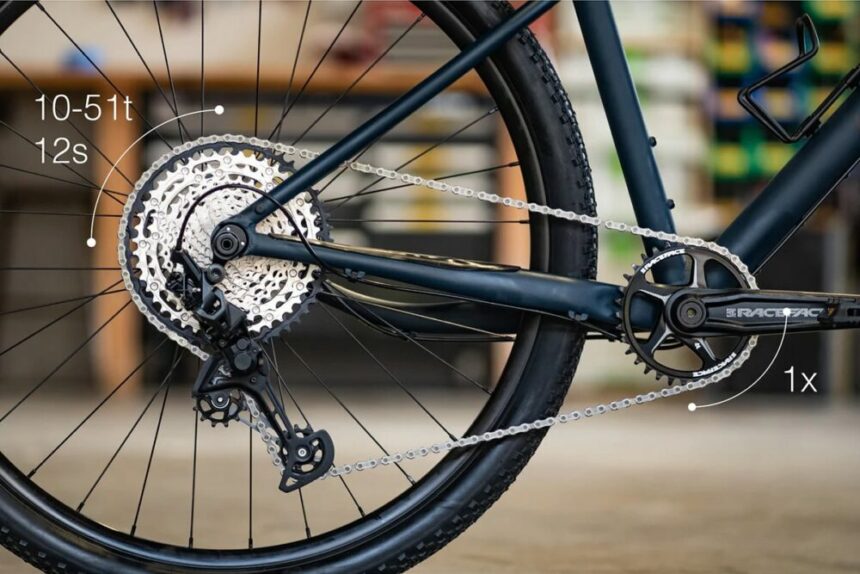
The first thing I analysed was the lowest climbing gear.
Having sufficiently low gears is crucial for touring because it allows you to climb at a manageable speed, even with a fully loaded bike. If your gearing is too high, you’ll burn more energy than necessary, fatigue more quickly, and make every steep ascent feel harder than it needs to be.
To compare the low gears of different touring bikes, I use a unit of measurement called gear inches. This standardises wheel size, tyre width, and drivetrain differences into a single number.
Don’t worry about the fact that it’s in inches. Nothing ever gets converted, and you’ll find the numbers better to compare. A gear that’s 10% lower in gear inches is simply 10% easier to pedal.
For on-road touring, I target 20 gear inches or below. For off-road riding, under 18 gear inches is ideal. In practice, the lower your gearing, the steeper the climbs you’ll be able to tackle comfortably.
Frame Geometry
Next, I looked at the frame geometry of each bike. My goal is to prioritise bikes that offer an upright riding position and stable handling.
In practice, that means I’m focusing on longer chainstays and wheelbases, a tall stack height for comfort, and steering characteristics that suit the type of handlebar being used.
Price To Performance
Next, I narrowed the list by considering each bike’s price relative to the performance it delivers.
Touring bikes take a beating, so I focused on price points where you’re most likely to get reliable components and good performance. In most cases, that sweet spot falls between US $1,000 and $2,500.
If that’s still outside your budget, consider tracking down an older model of any of these bikes on the second-hand market. That way you’ll get excellent value without compromising on reliability.
Frame Stiffness
Frame stiffness is one of the defining characteristics of a true touring bike.
Most touring setups have luggage at the front and rear of the bike, and the frame has to handle the twisting forces created between those two load points. If the frame isn’t stiff enough, the bike can feel unsettled and become more susceptible to speed wobbles.
For consistent handling and stability, we want frames that are stiff without being overly heavy. Well-designed touring frames typically use oversized tubing to strike this balance, giving the bike a rock-solid feel when fully loaded.
Tyre Clearance
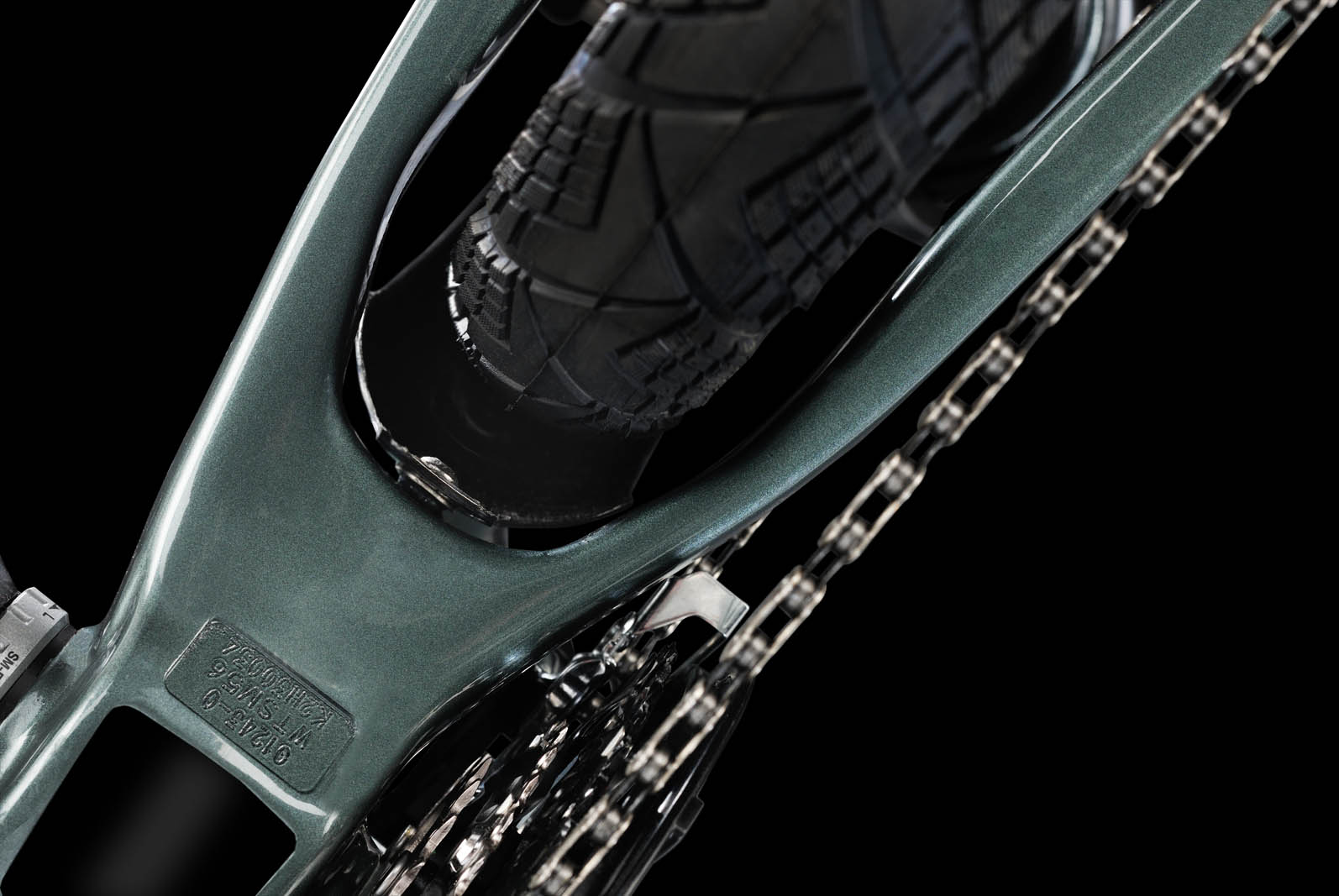
Touring bikes benefit enormously from wider tyres, especially because they need to support heavy loads and handle rough or unpredictable surfaces.
Although narrow tyres work well on smooth pavement, wide slicks don’t actually slow you down much. They’re also significantly more comfortable while giving you access to far more terrain.
For most paved-road touring setups, around 50 mm (2.0″) is the ideal width with fenders installed. This keeps your options open: you can run narrower tyres for pristine pavement, yet still have room for 2.20″ mountain bike tyres when the route gets rough.
If you spend most of your time on dirt roads, going wider than 2.40″ (62 mm) will give you the best control, comfort, and long-term durability.
Kickstand Mounts
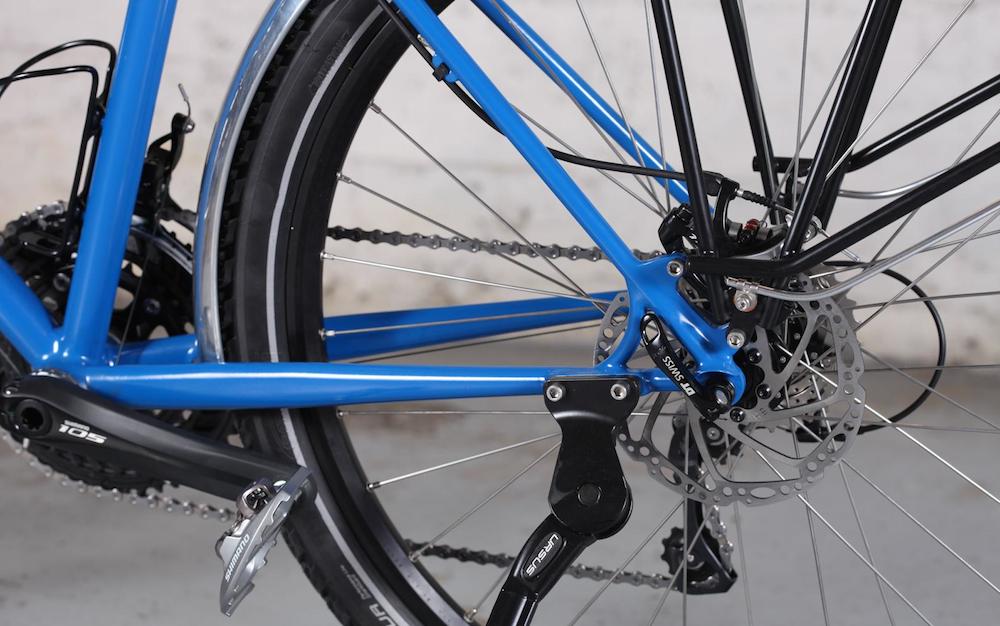
Finally, I favoured bikes that include dedicated kickstand mounts.
It’s surprising how many touring bikes still lack a proper place to install one. Kickstands only weigh 250 grams (9 oz), and you’ll use them dozens of times a day. That’s when packing the bike, grabbing supplies, taking photos, or doing quick maintenance.
Best Touring Bikes: Long Distance
Long-distance touring bikes are built with enough stiffness to carry four large panniers, while using durable components that can handle the extra weight. They’re best suited to travel on smoother roads, but are still capable of tackling rougher surfaces when needed.
Marin Four Corners 1
Climbing Gear: 21″ 5% Lower Than Average
Steering Speed: 69 mm 6% slower than average
Stack Average: 617 mm 18 mm taller than average
Weight: 13-14 kg or 29-31 lb 7% Lighter than Average
Tyre Clearance: 50 mm 11% Wider Than Average
Minimum Standover: 668 mm
Sizes: XS, S, M, L, XL
Price: US $1249
The Marin Four Corners 1 has long been a popular steel touring bike, thanks to its very competitive price point.
Equipped with the latest Microshift Sword groupset, the gear ratios are finally suited for touring. The bike offers a super-upright riding position thanks to a long head tube, and it features numerous mounting points for different luggage configurations.
A smart feature is that the extra-small and small sizes use 650B wheels instead of 700C, which helps minimise toe overlap. The XS frame will actually fit riders as small as 150cm or 4’11″, thanks to its super low standover height.
There is a kickstand mount at the rear dropout so you can easily pack and park your bike, and the Four Corners is available in two colours.
If you’re doing any more mountainous trips, I would highly recommend fitting a CUES rear derailleur and an 11-42T cassette. These components pair perfectly with the current drivetrain and will take you up steeper roads.
Want to know more?
Head over to GearX.com to find additional specs, geometry charts, and how to place an order.
Bombtrack Arise Tour
Climbing Gear: 20″ 10% Lower than average
Steering Speed: 66 mm Same as average
Stack Average: 570 mm 29 mm lower than average
Weight: 14-15 kg or 31-33 lb Same as average
Tyre Clearance: 42 mm 9% Narrower Than Average
Minimum Standover: 733 mm
Sizes: XS, S, M, L, XL
Price – US $2999 or €2499
At the next price tier, the Bombtrack Arise Tour steps things up with a more premium frame and higher-end components, and it comes fully equipped with dynamo lighting, racks, and fenders. That does push the price higher, but keep in mind the accessories alone are valued at US $800. It’s roughly $400 for the dynamo system, $350 for Tubus racks, and $50 for the fenders.
The steel frameset looks great and offers typical touring bike handling. I especially like the hidden spare spoke holder tucked inside the seatstay, and the use of smaller 650B wheels on the XS size to minimise toe overlap.
The main frame drawback is the relatively low stack height. If you prefer a more upright position, you’ll need to achieve it with a riser drop bar like the Redshift Top Shelf or an extra high-rise stem.
The frame also isn’t designed for a kickstand, but thanks to the seatstay-mounted rear brake caliper, you can easily fit a universal kickstand like the Pletscher Multiflex, which I’ve found works very well.
Out of the box, the Arise Tour features a 2×10 drivetrain with a lower-than-average climbing gear. Braking is handled by TRP Spyre mechanical disc brakes paired with a 180 mm front rotor, delivering about 13% more stopping power than typical. These mechanical disc brakes are extra reliable and keep maintenance simple.
Other reliable components include bar-end shifters. They take a bit of getting used to, but they can take a beating. A nice bonus is that you can switch them into friction mode if your shifting starts acting up.
Want to know more?
Head over to AngryCatfishBicycle.com to find additional specs, geometry charts, and how to place an order.
Rockrider ADVT 900
Climbing Gear: 20″ Same as average
Steering Speed: 69 mm 3% faster than average
Stack Average: 610 mm 8 mm lower than average
Weight: 17-18 kg or 38-40 lb 6% heavier than average
Tyre Clearance: 50mm Same as average
Minimum Standover: 725 mm
Sizes: S, M, L, XL
Price: €1699
Moving over to flat-bar touring bikes, the Rockrider ADVT 900 earns its place on this list thanks to its outstanding value.
This bike is available through Decathlon, and it comes fully equipped straight out of the box: racks, fenders, dynamo lights, the ever-popular Brooks B17 saddle, durable Schwalbe touring tyres, and a long-lasting Shimano CUES drivetrain with a 20-inch climbing gear. This is about as good as it gets in this price range.
The frame features long chainstays for stability and can support a 170 kg total load, which is around 40 kg more than most touring bikes.
You can also charge your devices directly from the front dynamo hub using a USB port integrated into the steerer tube. Independent tests have shown that the Cycle2Charge system performs impressively at a speed of around 20 km/h.
Want to know more?
Head over to Decathlon.co.uk to find additional specs, geometry charts, and how to place an order.
Best Touring Bikes: Around The World
As the name suggests, Around-The-World touring bikes are intentionally overbuilt to handle very heavy loads with minimal risk of component failure, and they’re designed to perform on mixed terrain. They tend to be heavier than other touring bikes and often come equipped with a range of accessories right out of the box.
Maxx Pacemaxx Tour
Climbing Gear: 14″ 30% lower than average
Steering Speed: 103 mm 40% Slower than average
Stack Average: 669 mm 51 mm taller than average
Weight: 18-19 kg or 40-42 lb 11% Heavier than average
Tyre Clearance: 2.4″ 22% Wider Than Average
Minimum Standover: 713 mm
Sizes: S, M, L, XL, XXL, 3XL
Price: €2199
If you’re looking for a round-the-world touring bike without paying a premium price, it’s hard to beat the Maxx Pacemaxx Tour.
This MTB-inspired touring bike is built around an exceptionally strong and stiff frame, with a total system weight rating of 180 kg. The Pacemaxx has a very long wheelbase combined with slow steering, helping it stay composed under a heavy load. The upright riding position delivers all-day comfort, and with six frame sizes, it can fit riders from 150 to 205 cm tall. I also like that the smooth welds and internal cable routing give the frame a more classy finish than most bikes at this price point.
Out of the box, the Pacemaxx is ready for global travel, featuring durable tubeless wheels, dynamo lighting, Schwalbe touring tyres, and an ultra-low 14-inch climbing gear for steep hills. That’s 30% lower than most touring drivetrains!
You can also configure the Pacemaxx from the ground up using Maxx’s configurator. Suspension forks, suspension seatposts, and a wide range of touring accessories can be added, and you can even choose from over 200 paint colours! There’s also the option to upgrade to a Rohloff 14-speed internal gear hub with a belt drive for around €1,500 extra.
Want to know more?
Head over to Maxx.de to find additional specs, geometry charts, and how to place an order.
Best Touring Bikes: Trekking
Trekking bikes are long-distance touring bikes built around a suspension fork, which adds comfort on rough dirt or cobblestone roads. The trade-offs are that front pannier racks are harder to fit, and the suspension fork requires regular maintenance to perform well.
Cube Kathmandu EXC
Climbing Gear: 20″ Same as average
Steering Speed: 79 mm 3% Faster than average
Stack Average: 633 mm 3 mm taller than average
Weight: 15-16 kg or 33-35 lb Same As Average
Tyre Clearance: 50 mm 4% Wider Than Average
Minimum Standover: 785 mm
Sizes: 46, 50, 54, 58, 62
Price: €1499
In terms of trekking bikes, the Cube Kathmandu EXC is an excellent option at a very attractive price.
For a start, the Kathmandu comes loaded with touring essentials: dynamo lights, a rear rack, fenders, and a kickstand. It features a suspension fork up front that can be locked on smooth road sections, so you don’t waste pedal power.
The Kathmandu is equipped well with a 20-inch climbing gear that’s suitable for most touring situations. Like the previous two bikes, it’s using the Shimano CUES 22-speed groupset, which is long-lasting and has a good gear range.
The frame geometry delivers both an upright position and stable handling, keeping you comfortable. Shorter riders just need to watch out for the tall standover heights of the small-sized frames.
Want to know more?
Head over to Cube.eu to find additional specs, geometry charts, and how to place an order.
Best Touring Bikes: Off-Road
Off-road touring bikes are built with extra tyre clearance, lower gearing, and more stable steering. Their wheels tend to be stronger, and the frames usually come with additional mounting points for frame bags, cargo cages, and extra water bottles.
Esker Lorax
Climbing Gear: 21″ Same as average
Steering Speed: 101 mm 15% Slower than average
Stack Average: 631 mm 13 mm taller than average
Weight: 13-14 kg or 29-31 lb 7% Heavier Than Average
Tyre Clearance: 2.60″ 4% Wider Than Average
Minimum Standover – 730 mm
Sizes – S, M, L, XL
Price – US $2200
The Esker Lorax is one of a few drop-bar bikes that genuinely blur the line with a mountain bike. Its ultra-stable geometry, generous tyre clearance, and ability to run super low climbing gears give it proper off-road capability. This steel bike will fit a 2.6″ tyre at the rear, and up to a 3.0″ tyre up front, giving you ample traction and comfort.
The Lorax puts you in a notably upright riding position, making it much easier to access the drops for long periods of time. That means better braking control and plenty of hand and body position options for long days in the saddle. The bars themselves are wider than most, offering more steering leverage for when the terrain gets technical.
In terms of components, the Lorax comes with reliable Avid BB7 mechanical disc brakes, durable Maxxis Ikon tyres, and a comfortable Ergon gel saddle.
On top of that, Esker offers plenty of component customisation. The stock Microshift Sword drivetrain can be upgraded to SRAM or Shimano. You can also upgrade wheels and brakes, add a dropper post, or even fit a suspension fork to tailor the Lorax to your preferred terrain.
And if you’re looking for a good rear rack for panniers, the Old Man Mountain racks seem to fit best.
Want to know more?
Head over to Esker Bikes to find additional specs, geometry charts, and ordering information.
Kona Unit X
Climbing Gear: 18″ Same As Average
Steering Speed: 98 mm 10% Slower than average
Stack Average: 602 mm 15 mm lower than average
Weight: 14-15 kg or 31-33 lb 5% Heavier Than Average
Tyre Clearance: 2.60″ Same As Average
Minimum Standover: 695 mm
Sizes: S, M, L, XL
Price: US $1799
The Kona Unit X is a rugged off-road bike that has proven itself on long-distance adventures across continents.
At under US $1,800, it comes with an 18-inch climbing gear, clearance for 29 x 2.6″ tyres, and all the key touring braze-ons, including mounts for fenders, cages, and racks.
BIKE Magazine tested its lateral frame stiffness and found the Unit X to be the stiffest hardtail mountain bike ever measured. It was stiffer than any aluminium or carbon frame, making it ideal for carrying heavy loads.
The main downside is a relatively low stack height, so a bar with extra rise might be needed for a comfortable, upright position. Rear-rack mounting can be awkward due to eyelet placement, but the Tubus Logo Evo mounts directly to the sliding dropout bolts, keeping cargo low and stable.
One of the coolest features is its sliding dropout design, which makes it an excellent candidate for a Rohloff 14-speed hub conversion. You can even start with the singlespeed version to save $500, putting that money toward a Rohloff hub upgrade later.
Want to know more?
Head over to AngryCatfishBicycles.com to find additional specs, geometry charts, and ordering information.
Tumbleweed Prospector
Climbing Gear: 16″ 10% lower than average
Steering Speed: 82mm 5% Faster than average
Stack Average: 632mm 9 mm taller than average
Weight: 16-17 kg or 35-37 lb Same As Average
Tyre Clearance: 3.80″ 26% Wider than Average
Minimum Standover: 772 mm
Sizes: S, M, L, XL
Price: US $4950
If my videos have persuaded you that Rohloff hubs are a worthwhile investment, the Tumbleweed Prospector is a great off-road tourer.
It’s the priciest bike on this list, but nearly half the cost comes from the Rohloff 14-speed internal gear hub. These robust hubs offer more gears and a wider range than a typical 1X drivetrain, all while keeping critical components sealed from the elements. That means minimal maintenance, less cleaning, and fewer gear adjustments.
You can set these bikes up with 3.0” tyres on both 29” and 27.5” wheels. It even accommodates 27.5 x 3.8” tyres, which pushes it into fat bike territory. This flexibility lets you customise your Prospector based on what you want to do.
It’s also suspension fork compatible, and it has mounts for racks, cargo cages, and fenders. The main drawbacks are the tall standover in small sizes and the price. But don’t worry, I’ve also got a gearbox-equipped option that’s easier on the wallet…
Want to know more?
Head over to Tumbleweed.cc to find additional specs, geometry charts, and ordering information.
Priority Bruzer
Climbing Gear: 18″ Same as average
Steering Speed: 109 mm 21% slower than average
Stack Average: 618 mm 5 mm lower than average
Weight: 15-16 kg or 35-37 lb Same As Average
Tyre Clearance: 2.80″ Same As Average
Minimum Standover: 660 mm
Sizes: S, M, L, XL
Price: US $2499
The Priority Bruzer is an off-road tourer built around a 12-speed Pinion gearbox. These fully sealed gearboxes are renowned for their durability and are often seen as the main alternative to the Rohloff hub.
Pinion gearboxes offer some key advantages over Rohloff hubs, including a broader gear range, longer service intervals between oil changes, and a whisper-quiet operation. However, they also come with trade-offs: larger jumps between gears, added weight, and slightly reduced efficiency. If you’d like to know more, I have a video that compares them head-to-head.
Instead of a traditional chain, the Bruzer uses a belt drive, which essentially eliminates the need for cleaning or lubrication. In the right conditions, belt sprockets can last over 30,000 km. That’s 3X the lifespan of a typical chain drivetrain.
The Bruzer frame features a stable mountain bike geometry and fits up to 2.8″ wide tyres. As you’d expect from a capable touring bike, it includes all the mounting points needed for racks, cages, and accessories.
And at US $2499, the Bruzer offers incredible value, especially when you consider that Pinion gearboxes alone retail for nearly $2000.
Want to know more?
Head over to PriorityBicycles.com to find additional specs, geometry charts, and how to place an order.
Best Touring Bikes: Gravel & Light Touring
Light touring bikes are designed to be lighter and faster on smoother surfaces. They aren’t as stiff or durable as long-distance touring bikes, but will comfortably handle 10kg of luggage or so.
Poseidon X Gen 3
Climbing Gear: 22″ 12% lower than average
Steering Speed: 73mm 4% slower than average
Stack Average: 597mm 7 mm taller than average
Weight: 10-11 kg or 22-24 lb 9% Lighter than Average
Tyre Clearance: 45mm 8% Narrower Than Average
Minimum Standover: 775 mm
Sizes: S, M, L, XL, XXL
Price: US $999
The Poseidon X Gen 3 is the best budget light touring bike.
This aluminium bike weighs only 10.2 kg and comes equipped with a full carbon fork, which is virtually unheard of at this price point. The fork alone saves 400 to 800 grams compared to typical aluminium or steel forks.
Every component of the Poseidon is designed for faster rides with a light load. It features the microSHIFT Sword 1×10 groupset and Tektro mechanical disc brakes, which are easy to maintain while touring.
But speed isn’t the only focus. The bike also offers an excellent 22″ low climbing gear for steep hills and a comfortable upright riding position. It’s also tubeless-ready, helping to minimise punctures on the road.
The main downside is the lack of full fender mounts. However, the SKS SpeedRocker XL clip-on mudguards should work perfectly as an alternative.
Want to know more?
Head over to PoseidonBike.com to find additional specs, geometry charts, and how to place an order.
Focus Atlas 6.8 EQP
Climbing Gear: 22″ 12% lower than average
Steering Speed: 70mm Same as average
Stack Average: 593 mm 5 mm taller than average
Weight: 13-14 kg or 29-31 lb 15% Heavier Than Average
Tyre Clearance: 48 mm Same As Average
Minimum Standover: 757 mm
Sizes: XS, S, M, L, XL
Price: €1999
If you’re after a fast, lightweight touring bike that comes equipped with dynamo lights, fenders, a kickstand and a rear rack, the Focus Atlas 6.8 EQP is an excellent choice.
Its frame was measured as the stiffest gravel bike ever tested by Tour Magazin, coming in more than 10% stiffer than any other model. This is a major advantage when you’re carrying luggage. If you’d like to see the other top-performing frames, I’ve written an article that covers many other stiff gravel bikes HERE.
The Atlas ships with 45 mm tyres, but can fit wider if you remove the fenders. While the 22-inch low gear is slightly high for traditional touring, the Atlas will do just fine with a lighter load. That said, the Shimano CUES rear derailleurs can usually handle an 11-42T cassette if you’re happy to push the gearing limits a bit.
Want to know more?
Head over to Focus-Bikes.com to find additional specs, geometry charts, and how to place an order.
Cube Nulane Pro FE
Climbing Gear: 24″ Same as average
Steering Speed: 68 mm 4% faster than average
Stack Average: 591 mm 7 mm lower than average
Weight: 12-13 kg or 27-29 lb Same As Average
Tyre Clearance: 45mm 11% Narrower than average
Minimum Standover: 753 mm
Sizes: 50, 53, 56, 59, 62
Price: €999
My pick for a flat-bar light touring bike is the Cube Nulane Pro FE.
Like the Focus Atlas, it comes fully loaded with all the touring essentials, including dynamo lights, fenders, a kickstand and a rear rack. It offers 40 mm tyre clearance and a 24-inch climbing gear, which can be reduced to 22″ with a front chainring swap.
What makes the Cube truly amazing is its exceptional value for money. It’s just half the price of the Focus Atlas, while still offering decent quality components! It always surprises me that Cube can manage to sell a bike this good at such a great price.
Want to know more?
Head over to Cube.eu to find additional specs, geometry charts, and how to place an order.
Priority 600
Climbing Gear: 17″ 11% lower than average
Steering Speed: 87 mm 24% slower than average
Stack Average: 623 mm 21 mm taller than average
Weight: 13-14 kg or 31-33 lb 4% heavier than average
Tyre Clearance: 2.2″ 10% Wider Than Average
Minimum Standover: 710 mm
Sizes: S, M, L, XL
Price: US $2499
And lastly, the Priority 600 is the ultimate low-maintenance, light touring bike.
Its big selling point is the fully sealed Pinion gearbox paired with a belt drive. This does make it a bit heavier and less efficient than a bike with a derailleur drivetrain, but it requires virtually no maintenance, making it perfect for long tours.
The Priority 600 also features an upright riding position and comes fully equipped with touring essentials: dynamo lights, fenders, tubeless wheels, hydraulic disc brakes, and a convenient kickstand. It rolls on 27.5″ wheels with fast-rolling 50 mm slick tyres, ensuring a smooth and comfortable ride.
Want to know more?
Head over to PriorityBicycles.com to find additional specs, geometry charts, and how to place an order.
Summary
That rounds out the best touring bikes for 2026.
It was super hard narrowing this list down to so few, but you can see all the other great models in my Touring Bicycle Buyer’s Guide. There are so many more great bikes that I wish I could have included here.
My guide teaches you all about the other important bike features, as well as how to compare them all. And the best bit is that the guide is updated yearly for free!
If you’d like to know more, there’s a ton more information about my guide on this page HERE.
The post The 13 Best Touring Bikes You Can Buy In 2026 appeared first on CYCLINGABOUT.com.
Read more:CYCLINGABOUT.com