

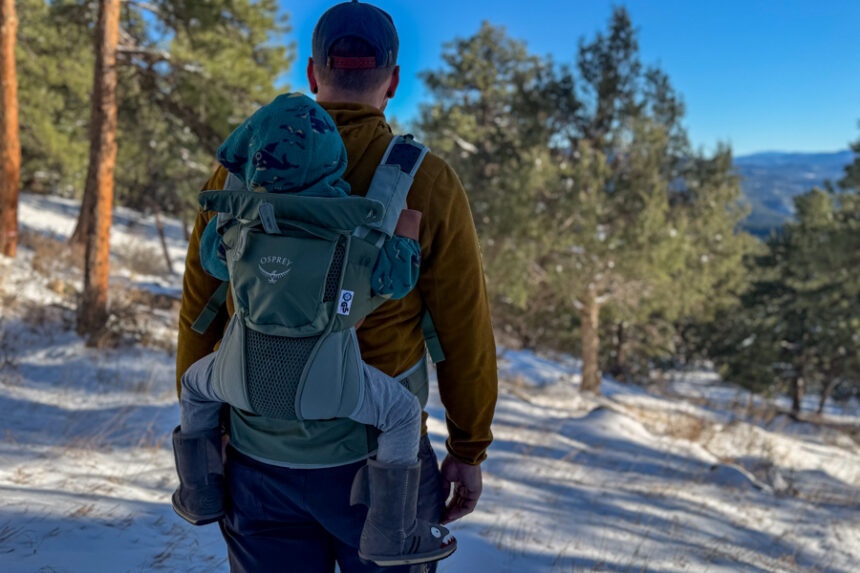
The Poco Soft is a handy, comfortable carrier to have on hand for impromptu hikes. – Photo Credit: Ben Dawson (CleverHiker.com)
Bottom line
The Osprey Poco Soft Child Carrier is not a hiking carrier in the traditional sense. If you are looking for a framed pack with a kickstand, 20-plus liters of storage, and a suspension system built for all-day mileage, that is what the rest of our baby carrier lineup is for. The Poco Soft is something different: a soft-structured carrier built with Osprey’s backpacking DNA. That means ripstop nylon construction, a hipbelt that actually moves weight to your hips rather than dumping it on your shoulders, and a deployable UPF 50 sunshade. At just 1 pound, 11 ounces, it packs down to a decently small size, covers newborns through toddlers up to 33 pounds in three carry positions, and handles everything from morning hikes and neighborhood walks to airport security lines.
The storage situation is minimal (one pocket), getting a kid into the back carry position solo takes practice, and the hipbelt can be stiff to release when you are trying to get out of the carrier in a hurry. But for parents who want Osprey quality and real hip support in a carrier they can throw in a bag, the Poco Soft is a great option.
For more side-by-side comparisons, be sure to check out our guide to the best baby backpack carriers.
How We Tested
Our analysts carried the Osprey Poco Soft on hikes through the Colorado foothills, on neighborhood walks, during a road trip from Colorado to the East Coast, and through more trips to the grocery store than we care to count (our little gear analysts’ preferred testing environment). We tested it with children ranging from newborn through toddler, including our toddler near the 33-pound max weight limit, on the warm spring afternoons and cooler spring evenings. We also swapped the carrier between testers of different heights and builds throughout testing to get a full picture of adjustability.
Quick Specs
Osprey Poco Soft Child Carrier
Best Soft Carrier for Hiking
CleverHiker Rating:
4.5/5.0
Price:
$160
Weight:
1 lb. 11 oz.
Volume:
0 L
Max Carry Weight:
33 lbs
Weight Score:
4.9
Pros
Hipbelt is supportive and has storageVery lightweight and breathableOffers three carrying positions
Cons
Lacking meaningful storageNot hydration compatible
Comfort
The hipbelt is the main differentiator here when it comes to the Osprey Poco Soft Child Carrier’s comfort. Osprey’s extra-wide design, with its 3D mesh and dual-adjustment system, does a better job of moving the load to the hips than most soft-structured carriers we have tested. The hipbelt is thicker and more substantial than what you find on comparable carriers in this category, and you really do feel the difference. Our analysts consistently noted that the Poco Soft carried more like a framed pack than a soft carrier, even well into longer days out. We tested it with our toddler at close to the 33-pound max weight limit, and it carried him well, which we didn’t expect going in.
The shoulder harness is padded with ventilated foam and Osprey’s 3D mesh contact surfaces. We found the Poco Soft reasonably breathable but not exceptionally so. The 3D mesh is a step up from the Poco LT’s stretch mesh and handles warm weather better than most soft carriers, though it does not match the airflow of a framed carrier with a mesh backpanel. Our little gear analysts had no complaints from the child seat, and the foldaway headrest proved useful on plenty of afternoon nap-walks.
There are a few minor downsides to consider. The shoulder straps take some getting used to on initial setup and are easier to dial in with a second adult helping, at least the first couple of times. The hipbelt cinches well but can be stiff and fiddly to release when you are trying to get out of the carrier in a hurry. Neither issue is a dealbreaker, but both are worth knowing before your first solo trip with a squirmy toddler.
The mesh back panel breathes ok but still gets hot over time. – Photo Credit: Ben Dawson (CleverHiker.com)
Features
The Ospre Poco Soft Child Carrier offers three carry positions that suit little ones at different stages of life. Face-in front carry works from newborn through around 36 months, face-out front carry is designed for infants who have developed head and neck control (up to about 16 months), and back carry opens up from around 12 months through toddler age. That range means the carrier can grow with your child, which matters more than it sounds in a world of increasingly expensive kids’ gear.
The deployable UPF 50 sunshade stashes neatly in the front pocket when not in use, so it is always there when you need it without getting in the way when you don’t. The removable drool pads on the shoulder straps are machine washable. So is the full carrier, which is the kind of feature that sounds unremarkable until you experience your first trailside blowout and have to deal with the aftermath.
The front hipbelt pocket has dual stretch openings (the only storage on the carrier) and is large enough to fit a phone, pacifiers, and other small items, such as snacks. There is no main compartment, no hydration sleeve, and no water bottle pocket. For anything beyond a short trip, you will need to layer a daypack on top or have a partner carry one.
The adjustable sternum strap and harness buckle work alongside the hipbelt to distribute and stabilize the load. The hipbelt itself, which Osprey describes as patented extra-wide with breathable 3D mesh and dual adjustment, is the defining comfort feature of this carrier and the clearest difference from most soft-structured competitors. It is also adjustable enough to fit waist sizes from 20 to 50 inches, ensuring it works for most body types.
The deployable sun shade really comes in handy for nap time. – Photo Credit: Ben Dawson (CleverHiker.com)
Durability
The Osprey Poco Soft Child Carrier held up well across several months of heavy use. Our carrier withstood countless day hikes, months of being stuffed in a trunk with reckless abandon, the kind of daily family abuse that soft carriers tend to accumulate fast, and it came out looking close to new. Buckles, the pocket zipper, and stitching at stress points have all held up without issue. It also went through the washing machine repeatedly without degrading the fabric, buckles, or drool pads, which aligns with what we hear from user reviews.
This carrier wears well and cleans up easily. Osprey backs it with their 7-year All Mighty Guarantee, covering repair or replacement for any damage or defect, which is about as strong a durability statement as a manufacturer can make.
In true Osprey fashion, the Poco Soft is made with high quality materials. – Photo Credit: Ben Dawson (CleverHiker.com)
Storage & Organization
The Osprey Poco Soft Child Carrier’s style isn’t designed for storage. It comes with one small front hipbelt pocket with dual stretch openings, and that’s all you get. But that’s more than you get with most soft-style carriers. As we mentioned above, the pocket is large enough for a few essentials plus a couple of high-value rocks that your toddler can’t seem to live without. There is no main compartment, no hydration sleeve, no water bottle pocket.
For parents who need more than that, the practical fix is layering the Poco Soft with a daypack or, better yet, a fanny pack or hip belt. The shoulder straps can be stacked, but it’s not the most comfortable way to travel.
It is worth noting that the Poco Soft has a bit more storage than the Ergobaby 360, which has none. Small advantage, but a real one for parents who want to grab a snack without lugging along a second bag.
The Poco Soft is light weight and work best on shorter hikes when a full framed carrier is overkill. – Photo Credit: Ben Dawson (CleverHiker.com)
Weight
At 1 pound, 11 ounces, the Osprey Poco Soft Child Carrier is among the lightest carriers we have reviewed in the CleverHiker lineup. The Ergobaby 360 edges it out at 1 pound, 9 ounces, though it carries much less weight on your hips and offers no storage. The lightest-framed carrier we have tested, the Osprey Poco SLT, weighs 4 pounds, 11.5 ounces, putting the Poco Soft in a different category altogether.
For travel, especially, that weight can make a huge difference. The Poco Soft fits in a carry-on, a diaper bag, or a daypack without claiming too much space, which is the kind of flexibility that makes a real difference on road trips and flights.
The shoulder straps are thick, padded, and handle weight well. – Photo Credit: Ben Dawson (CleverHiker.com)
Should You Buy the osprey poco soft child carrier?
If your primary use case is long hikes, big gear days, or carrying older toddlers over serious mileage, look at the framed carriers in our gear guide. The Osprey Poco Soft Child Carrier isn’t built for that.
But if you want a carrier that handles the everyday load from newborn through toddler, with a hipbelt that feels more like a framed pack than a soft carrier, a sunshade included, and one that weighs under two pounds and packs into a bag, the Poco Soft is a great choice. We reached for it constantly on the kinds of days that make up most of a parent’s outdoor life. Not the big summit days, but the morning trail, the errands, and the short hikes, where bringing a 7-pound framed pack is more commitment than the day calls for.
The Osprey Poco Soft Fits all types of caregivers.- Photo Credit: Ben Dawson (CleverHiker.com)
What Other Baby Backpack Carriers Should You Consider?
If you want to consider other baby backpack carriers besides the Osprey Poco Soft Child Carrier, there are several other excellent child carriers worth exploring in our guide to the best baby backpack carriers.
Ergobaby 360 Review: This is the closest competitor in the frameless soft carrier category. It is lighter and less expensive, with four carry positions, including hip carry. However, the hipbelt is less structured and supportive than the Poco Soft’s. If urban and casual use is all you need, it is a solid option. If you want the hip support and trail-ready construction of the Poco Soft, the Ergo 360 might miss the mark slightly.
Osprey Poco SLT Review: The entry point into the framed Poco lineup. It is considerably heavier at 4 pounds, 11.5 ounces, but it adds a stainless steel frame, 22 liters of storage, and far better support for longer hikes and heavier kids. If your adventures are trending toward more trail time and less around-town use, the SLT is the logical step up.
Deuter Kid Comfort Active SL: The Deuter Kid Comfort Active SL has a women’s-specific fit with a shorter adjustable back length and narrower shoulder straps, making it a strong option for smaller-framed caregivers. At 5 pounds, 13 ounces, it is one of the lighter-framed carriers in our lineup, and it delivers solid ventilation and comfort on moderate hikes without the bulk of the premium models.
The post Osprey Poco Soft Child Carrier Review appeared first on CleverHiker.