


In retrospect, 2025 may have been the year of the Department of Government Efficiency (DOGE) and its cost-cutting efforts, which touched nearly every federal agency, including those managing public lands.
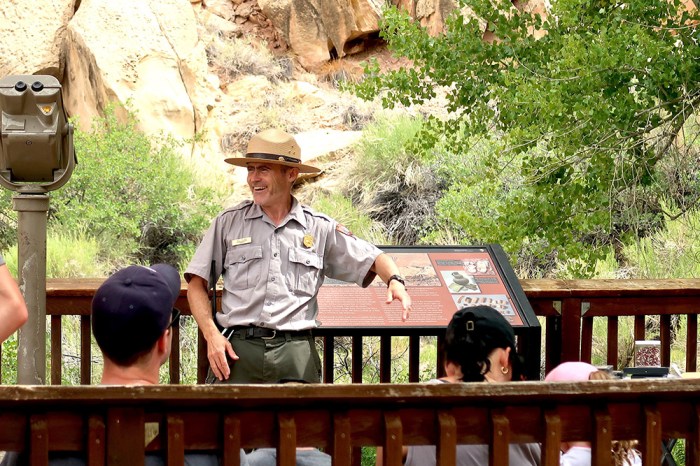
While mass firings at the National Park Service (NPS) made headline news last year, many other agencies also faced cuts. The full extent of public land job cuts has been unclear — until now. New data shows the total reductions to federal public land agencies in the West and their potential impacts.
The Study
Prospect Partners and Hawkeye Strategies, two policy watchdog groups focused on public lands advocacy, compiled federal data on 5,874 firings across six Western states: California, Arizona, Colorado, Montana, New Mexico, and Nevada. Together, these states account for over 200 million acres of public land, or about 30% of the country’s total.
The study examined job cuts across seven key agencies: NPS, U.S. Forest Service (USFS), U.S. Geological Survey (USGS), Bureau of Land Management (BLM), U.S. Fish and Wildlife Service (USFWS), Bureau of Reclamation (BR), and Bureau of Indian Affairs.
In terms of the percentage of public lands workforce fired and the total number of employees fired, Colorado ranked first. The state lost 1,753 jobs, or 26% of its public land employees.
Cuts to the other five states were as follows:
Nevada: 469 jobs lost, or 24%.
New Mexico: 855 jobs lost, or 20%.
Arizona: 679 jobs lost, or 16%.
Montana: 578 jobs lost, or 15%.
California: 1,540 jobs lost, or 14%.
The Rationale
These cuts were part of DOGE’s efforts to eliminate waste, fraud, and abuse in the federal government. According to its website, it has saved an estimated $215 billion in total across all cuts to all agencies. There is widespread debate if this number is accurate.
Multiple news outlets, including NPR and BBC, have reported that the DOGE site contains many errors. If this $215 billion number is accurate, it would represent approximately 3% of the $7 trillion budget for fiscal year 2025.
For the Department of the Interior, to which all these agencies except USFS belong, its total budget in 2025 was $43.37 billion, or 0.6% of the total budget.
Looking specifically at these public lands job cuts, if we were to assume each of the 5,874 employees received a salary and benefits package totaling $100,000 (a high estimate), that would equal $587.4 million. That would represent a 0.00839% cut to the 2025 budget.
Why Does It Matter?
With summer fast approaching, it will soon be peak outdoor recreation and peak tourist season in many public land areas.
Some national parks in these affected states are already showing signs of strain. In California, where 183 NPS employees were lost, lines stretched for hours this past weekend to enter Yosemite National Park. In the spring, a staff shortage at the park meant that entrance fees, which cost $35 per car, went uncollected.
Traffic in El Cap meadow at a standstill in 2006 — the problem has not improved; (photo/terraplanner)
With a historically low snow pack this past winter, experts widely expect that the 2026 wildfire season will be “above normal” in many areas of the U.S. This will come on the heels of these firings, with fewer federal employees engaged in rangeland management, a key part of prevention.
Across all six states, the Forest Service consistently experienced the highest number of cuts. This agency, part of the U.S. Department of Agriculture, recorded 515 firings in California and 481 in New Mexico. The USFS is key in managing timber production, grazing rights, and fighting wildfires. It estimates it responds to 7,500 fires per year.
People who engage in outdoor recreation may experience the effects of these cuts firsthand. Colorado and Nevada saw 25% and 27% cuts in staff working in emergency dispatch centers, respectively. These employees help coordinate first responders in case of emergencies.
GearJunkie reached out to the Department of the Interior (DOI) for comment about these cuts, and received the following statement:
The Department’s work to deliver American Energy Dominance and responsibly manage public lands continues without interruption, and mission-critical functions such as wildfire response and emergency operations remain fully supported. Staff across the Department ensure continuity of operations and remain focused on expanding domestic energy production, streamlining permitting and reducing unnecessary delays.
The Department has prioritized operational readiness across all bureaus, including the National Park Service hiring more than 5,000 seasonal employees this year. Public lands are staffed, open and ready to welcome visitors.
Dedicated personnel across Interior continue to carry out the mission every day, from emergency response and wildfire management to maintaining visitor services and protecting the nation’s natural and cultural resources.