

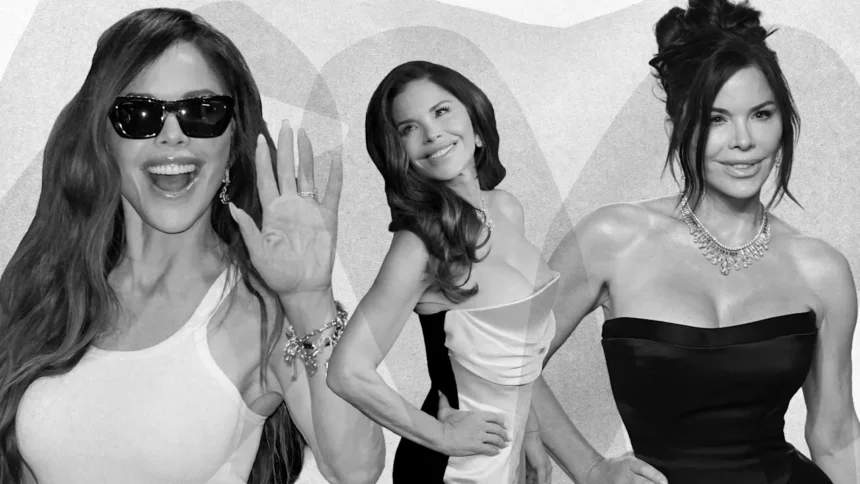
Lauren Sánchez Bezos is great at being happy—so much so that she is encouraging others to pursue unapologetic happiness, too. But, unsurprisingly, those without private jets aren’t buying it.
Over the weekend, The New York Times published a profile on Jeff Bezos’s new wife, Sánchez Bezos, offering a glimpse into the powerful couple’s daily life. Their mornings, for example, start off at their $230 million compound in Florida, where the pair craft a gratitude list before kicking off their day.
The story also dissects the couple’s dynamic—regular exercise and leaning on each other for advice—a blueprint for reaching happiness while enjoying the perks of wealth. As the NYT put it: “Mrs. Sánchez Bezos seems to have influenced the uber-rich to stop apologizing, and start enjoying themselves.”
The reaction from readers was not exactly warm.
“How tone-deaf are you? She is benefitting from the work of millions of people who break their backs every day working at @amazon, where median worker compensation is about $40K/year,” a user said via Threads.
Another user echoed the criticism on Reddit, contrasting Sánchez Bezos’s happiness against the backdrop of broader labor concerns. “What makes this piece so astonishing isn’t just its tone-deafness . . . it’s the sheer, almost athletic commitment to pretending that obscene wealth is a personality trait even worth profiling,” the user said of the NYT profile.
That user added: “The real story this piece carefully avoids is the widening gap between this gilded bubble and everyone else. While workers are laid off, wages stagnate, and housing becomes increasingly unattainable, we’re handed a glossy puff-piece on gratitude lists and yacht parties.”
But others took aim at the NYT itself for platforming the wealthy couple.
“Hi @amychozick 👋🏻 Are you allowed to refuse assignments? This feels, um, off,” a user said via Threads, tagging the profile’s author.
“The NYT is rage-baiting us,” another added.
In fact, the story follows a string of controversies regarding the newspaper’s stories and headlines that have drawn online criticism. For instance, a recent story about white women adopting the Chinese game mahjong as a hosting trend brought heavy criticism online.
“Well done, NYT. I didn’t think you could cap your white woman Mahjong rubbish, but here we are whitewashing fascists,” a user said on Reddit, reacting to the Sánchez Bezos profile.
Then there was the now-infamous “Did Women Ruin the Workplace?” story from November 2025—which, after much backlash, led to the publication altering the headline to “Did Liberal Feminism Ruin the Workplace?”
“But what’s The New York Times’s excuse for producing headlines that seem scientifically engineered to cause a nuclear meltdown on Bluesky?” Fast Company digital culture writer Joe Berkowitz said in a story at the time.
For many, it has become evident that rage-baiting is no longer an occasional post, but rather part of a larger strategy.
“One possible explanation is that the editors are indeed aiming for maximum outrage,” Berkowitz wrote. “A hate-share gets just as much traffic as any other kind, after all, and modern media incentives heavily favor the pot-stirring headlines the newspaper keeps cooking up.”